

Course Details
Your Growth, Our Mission
Course Description
This 5-day course focuses on introducing the non-geoscientist to some of the important concepts of geoscience relevant to anyone working in or seeking to work in the industry.
The Training Course Will Highlight ?
Training Objective
- understand the geological environment responsible for hydrocarbon formation, migration and storage
- identify the main characteristics of hydrocarbon-bearing formations
- estimate the volume of such reservoirs
Target Audience
Non-geoscientists (engineers, drillers and other technical personnel) who need to work with geoscience concepts concerning the subsurface.
Course Requirement:
Science or Engineering background.
Training Methods
This interactive Training will be highly interactive, with opportunities to advance your opinions and ideas and will include;
- Lectures
- Workshop & Work Presentation
- Case Studies and Practical Exercise
- Videos and General Discussions
Daily Agenda
Day 1. Geological concepts
- Introduction to Earth materials, processes, basins and petroleum system: Review of the nature and composition of the Earth; Plate tectonics and sedimentary basins; Principles of stratigraphy; Rock types and their identification.
- Transport, deposition and deformation processes: Reservoir Seal, Source rock and migration path, Trap, Timing; Understand how depositional process affect texture of sedimentary rocks and the relation with petro physical properties; common depositional structures and their origin; well (log and core) observations and their relation to a 3-D depositional model; general differences between carbonate and clastic depositional process and environments?
Day 2. Reservoir architecture
- Reservoir heterogeneity, architecture, faults seals: Identify the main types of structural features; Identify the characteristics of a structural trap; Main types of faults, and tectonic setting; Fold geometries; Fractures and other localized deformation and the effect on fluid flow characteristics; Fracture patterns associated with folding; Structural features shown in core and on dipmeter/image logs/cross sections and maps; Fault compartmentalization.
Day 3. Geophysics
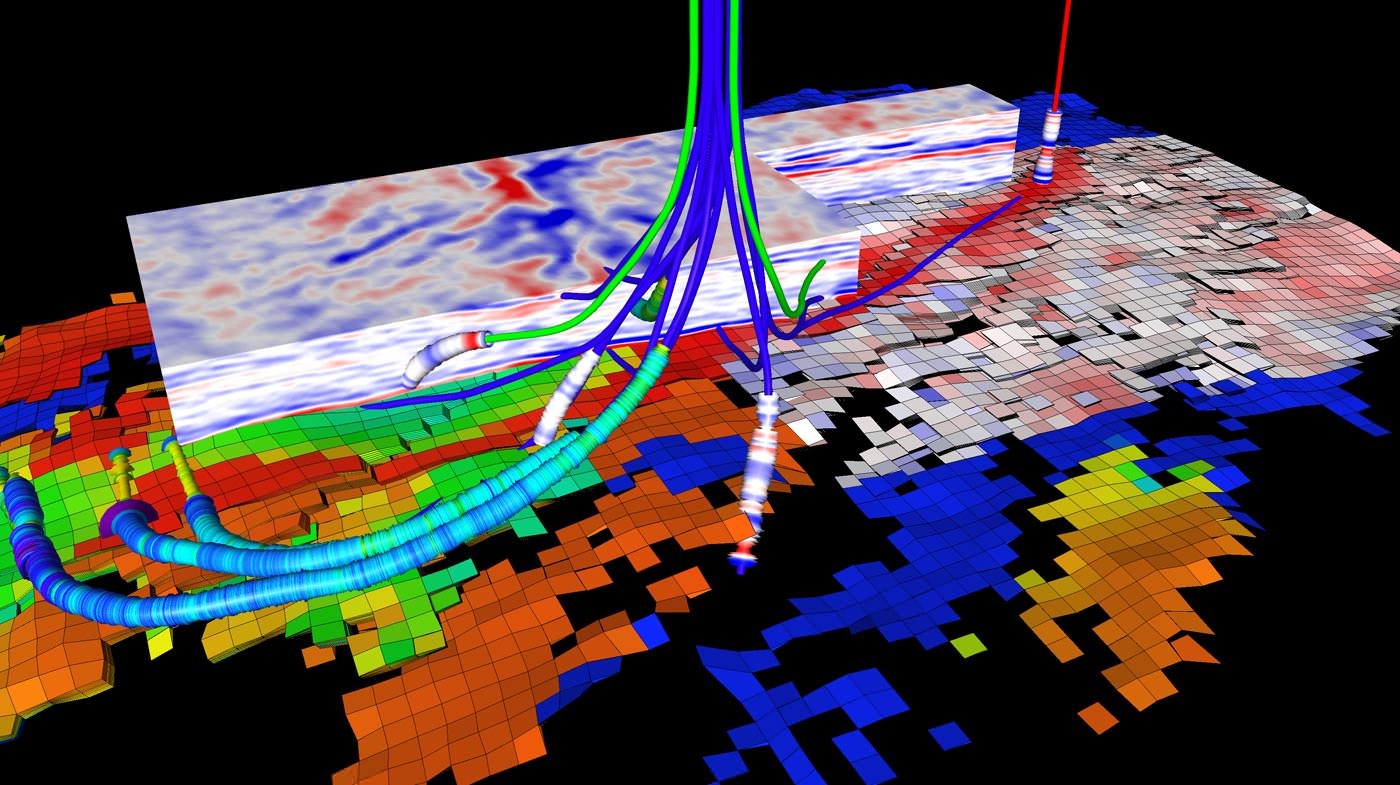
- Geophysics: Review the basic geophysical concepts as used in the petroleum industry; Applications of seismic data in reservoir description, main geophysical methods; Wave propagation – P and S waves, alteration at interfaces (reflection/refraction); Seismic method (data gathering and interpretation); Use and limits of seismic in reservoir description.
Day 4. Subsurface interpretation
- Mapping: Spatial data contouring using manual and mechanical methods; Advantages and disadvantages of computer and manual mapping techniques; Characteristics of computer gridding and manipulation; Identification of "good" and "poor" maps from the type and density of the input data.
- Correlation: Importance in reservoir development; Definition of a subsurface framework to understand geological relationships between wells; Identification of correlation markers and flow units; Principles of flow unit correlation; Role of different data (e.g. seismic, log, biostratigraphic) and models (sequence stratigraphy) on flow unit correlation; Common misinterpretations in flow unit correlation.
Day 5. What size hydrocarbon accumulation?
- Geostatistics, Property evaluation and Volumetric: Porosity/permeability variations; Relationships between petro physical properties and geology; Construction of measures of spatial correlation (variorums); Definition of gross/net sand and gross/net pay; Methods to determine gross rock volume; Reserve parameter distributions; Calculation of volumetric reserves by deterministic and stochastic methods?
Accreditation
BTS attendance certificate will be issued to all attendees completing minimum of 80% of the total course duration.
Quick Enquiry
Request Info
Course Rounds
5 Days| Code | Date | Venue | Fees | Action |
|---|---|---|---|---|
| DE210-05 |
2026-11-16
|
Istanbul
|
USD
5950
|
Register |
| DE210-01 |
2027-01-31
|
Cairo
|
USD
5450
|
Register |
| DE210-02 |
2027-04-11
|
Dammam
|
USD
5450
|
Register |
| DE210-03 |
2027-08-08
|
Dubai
|
USD
5450
|
Register |
| DE210-04 |
2027-11-22
|
Istanbul
|
USD
5950
|
Register |
Prices don't include VAT
Related Courses
Your Growth, Our Mission
Contact Us
Contact us to meet all your inquiries and needs, as our professional team is pleased to provide immediate support and advice to ensure you achieve your goals and facilitate your experience with us in the best possible way. UAE
UAE
 Office
Mobile
Office
Mobile
 E-mail
 Working
Hours
Working
Hours