

Course Details
Your Growth, Our Mission
Course Description
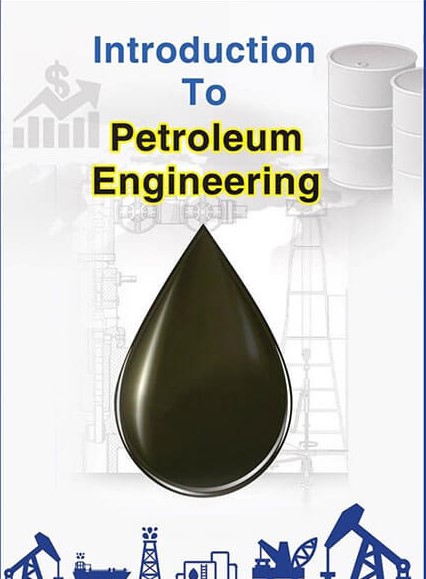
This 5-day course examines engineering challenges and the wider economic impacts (past and present) of oil and gas exploration, drilling and production. Includes a petroleum lab visit, worked examples and plenty of discussion in which participation is encouraged.
The Training Course Will Highlight ?
A degree in science or mechanical, chemical or civil engineering is desirable.
Training Objective
Target Audience
The course is intended primarily for those with non-petroleum engineering degree but would serve as a useful refresher to oil industry professionals.
Training Methods
Daily Agenda
- Global energy (including petroleum) demand and supply.
- Petroleum geology: process of formation and migration of petroleum; suitable geological structure, type and mineralogy of hydrocarbon reservoir rocks.
- Petroleum geophysics: the application of earth's gravitational, magnetic and sound velocity properties in hydrocarbon exploration; 2D, 3D and 4D seismic surveys and their applications explained.
- Formation pressure as the primary energy source of hydrocarbon production
- Production mechanisms: primary, secondary, tertiary; enhanced oil recovery and improved oil recovery.
- Drilling operations: techniques; offshore drilling and directional drilling; rig components (including drilling mud).
- Well logging: application and interpretation of the earth's response to natural and forced electric and nuclear sources.
- Petroleum reserves estimation.
- Well completion techniques: casing, cementing, down hole and surface components; perforation and multiple zone completion.
- Fluid flow in wells: inflow and outflow performance, single- and multi-phase flow regimes, principles of system analysis, well production problems and solutions.
- Operation considerations when retrieving underground physical rock samples and information that can be obtained.
- Reservoir rock properties: porosity, mobility, permeability, relative permeability, capillary pressure; methods of determination.
- Phase behavior, reservoir fluid properties and methods of determination.
- Gas reservoirs: thermodynamic equation of states (including ideal/real gas laws); non-linear (laminar) and non-linear (inertia, turbulent, flow behavior).
- Material balance: initial hydrocarbon in place, future reservoir performance, ultimate recovery calculations.
- Fluid flow through porous media: mathematical and numerical modeling approaches; classification.
- Transient pressure response evaluation by well testing techniques: information obtained, basic assumptions, equations, well productivity and skin calculations.
- History of the industry (economic growth, market control questions), current structure (private actors, public sectors, business models), industry trends (unconventional and IOR), wider issues and "above-ground" risk (resource ownership, future energy needs and alternative energy carriers, climate change).
Accreditation
- Delegates will receive written course notes along with a copy of the power point presentation.
- BTS Consultant Certificate of Attendance will be issued to each delegate upon successful completion of the course.
Quick Enquiry
Request Info
Related Courses
Your Growth, Our Mission
Contact Us
Contact us to meet all your inquiries and needs, as our professional team is pleased to provide immediate support and advice to ensure you achieve your goals and facilitate your experience with us in the best possible way. UAE
UAE
 Office
Mobile
Office
Mobile
 E-mail
 Working
Hours
Working
Hours