
Course Details
Your Growth, Our Mission
Course Description
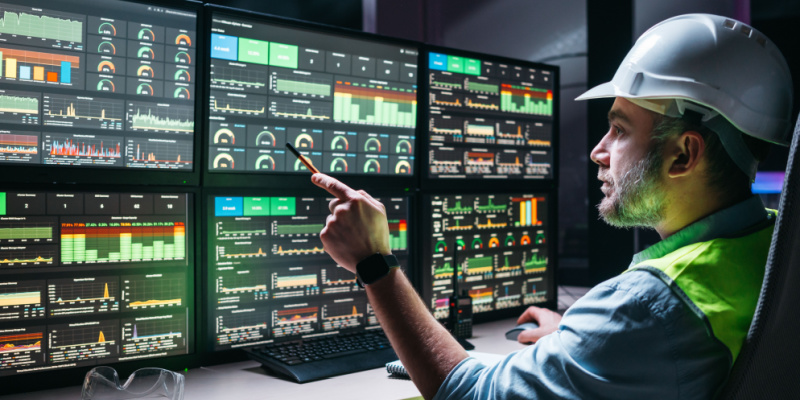
This course provides introductory technical material about SCADA systems. It addresses the basic layout of SCADA systems and the parameters for process selection. In particular, it looks at a pipeline monitoring situation from a remote wellhead location to a central production facility.
Communications and the basic building blocks of SCADA systems are dealt with in greater detail. A discussion of economic tools and future trends rounds out the course.
No recommendations about specific equipment or methods are provided although techniques that enable the delegate to such selections are included.
The Training Course Will Highlight ?
Training Objective
Describe, “What is SCADA?”
Describe the history of SCADA.
Describe the importance of communications.
Describe “Real-Time” control.
Describe the various types of communication (Radio, landline, telephone, and microwave).
Describe the role of remote terminal units.
Describe the role of master terminal units.
Describe various sensors and actuators.
Describe the operator interface, alarms, trends, and report generation.
Describe how SCADA is likely to develop in the future.
Target Audience
The course is aimed at the instrument technician or production staff either just starting a career in the industry or need of further training. It will be particularly useful for those who are qualified in the field of electronics and looking for an overall picture of the mysteries of automation. The course should be viewed as one of a series of courses rather than as a standalone course.
Training Methods
Daily Agenda
- What is SCADA
- Definition of SCADA
- Applicable Processes
- Elements of a SCADA system
- A two-way system
- A brief history of SCADA
- Development from telemetry
- Dependence on communications and computers
- Real-time systems
- What is “real-time?”
- Communications and the “master/slave” principle
- Determining the scan interval
- Where to compute
- Remote control – What not to SCADA
- Remote control
- Safety systems
- Regulatory requirements
- Communications
- Conversion from analog to digital
- Serial communication for long-distance purposes
- A communications system
- What is a protocol?
- Modems
- Synchronous or asynchronous?
- Telephone, cable, or radio?
Day 2:
- Remote terminal units RTUs
- What is an RTU?
- Communications interface
- Discrete control and analog control
- Pulse control
- Serial control
- Master Terminal Units
- Communications interface
- Configuring a picture of the process
- Some simple applications
- Data storage
Day3:
- Sensors, actuators and wiring
- Special considerations
- Standardization
- Maintenance
- The operator interface
- Security considerations
- Alarming
- Control change screens
- Status screens
- Graphics and trending
- Reports
Day 4:
- SCADA economics
- Costs versus benefits
- The time value of money
- Capital costs
- Training and maintenance costs
- SCADA operating costs
- Benefits: reduced capital costs
- Benefits: reduced process operating costs
- Benefits: improved facility effectiveness
- Tax implications
Day 5:
- What’s next?
- Better communications
- Smarter RTUs
- Smarter MTUs
Accreditation
Certification that all the attendees will get BTS certification upon successful completion of the exam assessment
Quick Enquiry
Request Info
Related Courses
Your Growth, Our Mission
Contact Us
Contact us to meet all your inquiries and needs, as our professional team is pleased to provide immediate support and advice to ensure you achieve your goals and facilitate your experience with us in the best possible way. UAE
UAE
 Office
Mobile
Office
Mobile
 E-mail
 Working
Hours
Working
Hours