

Course Details
Your Growth, Our Mission
Course Description
Principles and practice of well test analysis from the perspective of deriving properties of reservoir description. Fundamentals of well testing and integration of well testing with geological description.
The Training Course Will Highlight ?
Training Objective
Radial and non-radial Flow theory
- Theories of radial flow, skin (due to damage and various completion strategies, i.e. perforation, fractured, horizontal well) and Dietz shape factor. Fundamentals of productivity, Index calculation for various flow regimes (steady-state, pseudo-steady-state and transient flow).
- Theory of pressure transient analysis
- Drawdown and build-up solutions including superposition principle and permeability and skin calculations methods.
- Wellbore storage, type curve matching
- Available methods, applications and limitations including reliability of identified reservoir parameters.
- Straight line, diagnostic derivative and auto match analysis methods
- Order of analysis, benefits and limitations.
- Semi-infinite late transient analysis
- Basic single, two (parallel or intersecting) and multi fault systems. Fully or partially sealing communication faults.
- Semi-steady-state reservoir limit tests
- Analysis of well test data in a bounded drainage area including average reservoir pressure and drainage area calculations.
- Distributed Pressure Measurement
Basic theory, supercharging, its application for:
- Measurement of formation pressure,
- Sampling reservoir fluids,
- Permeability profiling. Benefits and limitations of permeability data obtained during short drawdown and build up including their integration with core, well log and well test data.
Exploration Application of Distributed Pressure Measurement
Theory and its applications for identification of:
- Presence of gas cap,
- Fluid type,
- Fluid contacts including perched WOC,
- Detection of hydrocarbon trapped as a residual saturation,
- Isolated compartment separated by barriers.
Field Development Application of Distributed Pressure Measurement
Theory and its applications for:
- Identification of effective vertical permeability when linked to reservoir simulations,
- Identification of horizontal permeability barriers,
- Identification of vertical permeability barrier,
- Vertical flow component.
Target Audience
This training course is suitable to a wide range of professionals but will greatly benefit:
- Petroleum Engineers & Production Engineers
- Processing engineers & other discipline engineers
- Geologists & Petro physicists
- Engineers who are new to the profession
- Other individuals who need to know about current & advanced techniques in EOR
Training Methods
This interactive Training will be highly interactive, with opportunities to advance your opinions and ideas and will include;
- Lectures
- Workshop & Work Presentation
- Case Studies and Practical Exercise
- Videos and General Discussions
Daily Agenda
Numerical Well Testing
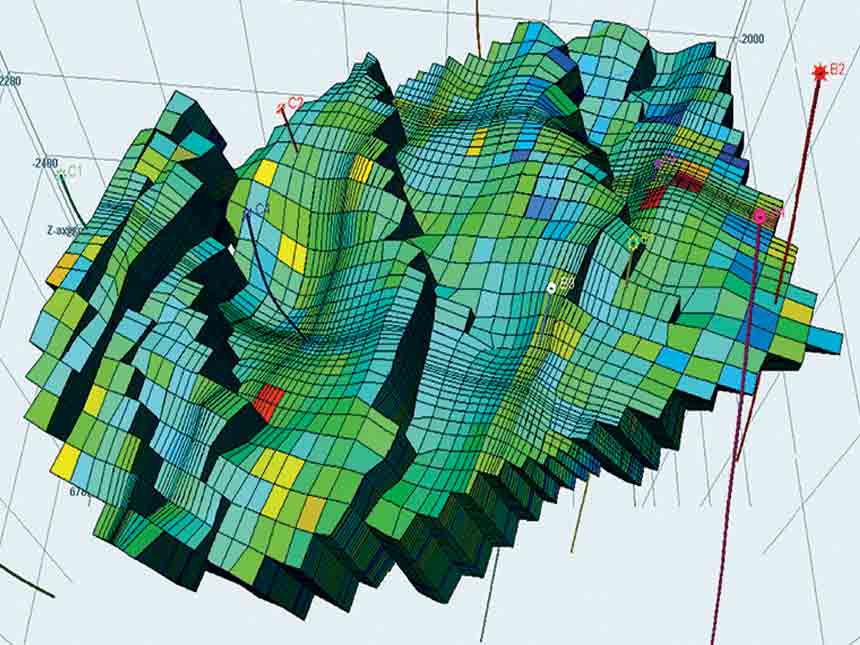
Basics and its application to characterize complex fluid and reservoir types.
Day 1
- Radial and non-radial flow theory. Theory of drawdown and build up pressure transient analysis.
Day 2
- Wellbore storage, type curve matching and diagnostic derivative applications and limitations. Semi-infinite system late transient analysis including fault system identification
Day 3
- Semi-steady-state reservoir limit tests for well in a bounded drainage area including average reservoir pressure and drainage area calculations.
Day 4
- Principle of distributed pressure measurement. Exploration application of distributed pressure measurement
Day 5
- Field development application of distributed pressure measurement. Fundamentals of numerical well testing and its application to characterize complex fluid and reservoir types
Accreditation
BTS attendance certificate will be issued to all attendees completing minimum of 80% of the total course duration.
Quick Enquiry
Request Info
Course Rounds
5 Days| Code | Date | Venue | Fees | Action |
|---|---|---|---|---|
| DE206-05 |
2026-11-22
|
Salalah
|
USD
5450
|
Register |
| DE206-01 |
2027-01-03
|
Cairo
|
USD
5450
|
Register |
| DE206-02 |
2027-05-23
|
Amman
|
USD
5450
|
Register |
| DE206-03 |
2027-09-19
|
Dubai
|
USD
5450
|
Register |
| DE206-04 |
2027-12-19
|
Casablanca
|
USD
5950
|
Register |
Prices don't include VAT
Related Courses
Your Growth, Our Mission
Contact Us
Contact us to meet all your inquiries and needs, as our professional team is pleased to provide immediate support and advice to ensure you achieve your goals and facilitate your experience with us in the best possible way. UAE
UAE
 Office
Mobile
Office
Mobile
 E-mail
 Working
Hours
Working
Hours