

Course Details
Your Growth, Our Mission
Course Description
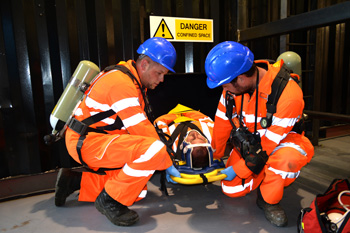
Confined spaces can be very dangerous places unless proper procedures are followed before and during entry. Working in confined spaces is an everyday occurrence in many occupations. When these spaces are properly identified and assessed, entry plans are in place and the plans are followed, work performed within a confined space can be completed safely and efficiently.
The Training Course Will Highlight ?
This course will provide participants with the information needed to understand the potential hazards of working in these spaces and the elements necessary to control those hazards prior to entry.
Training Objective
By the end of this course delegates will be able to:
- Understand the hazards of confined spaces
- Become knowledgeable in the OSHA safety standards for safeguarding confined space entries
- Learn the duties and responsibilities of the confined space entry participants
- Achieve familiarity with atmospheric testing equipment and entrance equipment
Target Audience
Team Leaders, Managers, Line Managers, Supervisors, Team Leaders, Project Managers, Control Center Operators and Supervisors, Emergency Dispatchers, Security Personnel and CCTV Operators, HSE Officers, HSE Personnel, HSE Professionals, Emergency Response Team Members, HSE Managers and Auditors, Health & Safety and Environmental Professionals, Coordinators, Specialists and other full-time safety practitioners, Fire Officers, Loss Control Managers, Security Directors and Managers, Security Supervisors, Facilities Directors and Managers, HR and Administrative Managers with responsibility for security, Project Managers, Safety Inspectors, Plant Managers and Supervisors, Incident Control Point (Forward Control) Team Members, Supervisors, Advisors, Auditors, Laboratory Personnel, Emergency Personnel, Maintenance Personnel, Procurement and Supply Chain Managers,
Training Methods
Daily Agenda
Introduction to Confined Spaces
- Definition of Confined Spaces
- Specifications of Confined Spaces
- Permit Required Confined Spaces
Confined Spaces
- Not designed for human occupancy
- Atmospheric hazard, oxygen deficiency / enrichment, sour gas (H2S), methane (CH4), carbon monoxide (CO)
- Limited access or egress
Typical Hazards in Confined Spaces: Atmospheric Hazards
- Oxygen Deficiency
- Combustible
- Flammable
- Explosive
- Toxic Gases / Vapors / Dust / Mists
Confined Space Hazard Assessment
- Formal documentation by competent person
- Oxygen, flammable, toxic, biological, chemical, physical, surfaces, mechanical, electrical, thermal, engulfment, hot work
Physical Hazards in Confined Spaces
- Unguarded Machine Parts
- Thermal Hazards
- Exposed Electrical Circuits
- Slip/Fall Hazards
- Engulfment
- Entrapment
- Hazardous Chemicals
- Biological Agents
- Noise
- Vibration
Other Possible Hazards in Confined Spaces
- Rodents / Snakes / Spiders
- Poor Lighting
- Wind
- Weather
Confined Space Entry Plans
- Duties of workers, contractors, management and attendants
- Rescue procedures, communication & equipment
- Personal protective equipment (PPE)
- Lockout and Tagout
- Ventilation, purging and inerting
- Atmospheric testing
Controlling Hazards of Confined Spaces
- Lockout – Tagout
- Disconnecting Pipes
- Ventilation
- Cooling
- Dumping
- Rinsing – Flushing
- Fall Arrest Gear
- Air Sampling
Confined Space Permit Program: Ventilation Requirements
- Purge if necessary
- 20 air changes per hour
Atmospheric Monitoring: Acceptable Entry Conditions
- Company Confined Space Entry permit posted
- Oxygen 19.5 – 23.5%
- Lower Explosive Level0%
- Toxic fumes/vapors less than PEL
- No engulfing material in space
- No hazardous chemicals or material
- Drained – Flushed
- Rescue Team Available on Site
- Attendant is present and equipment in place
- Space Temperature <100 degrees F
- LOTO Electrical components in space
- LOTO Mechanical Components in space
- LOTO All pipes to and from space
- Ventilation Established & Maintained
- Additional conditions required on permit
- Additional conditions required by Entry Supervisor
Duties
- Entry Supervisor
- Attendant
- Entrant
- Rescue Team
Entry & Rescue Equipment
- Air Monitor
- Fall Arrest System
- Ventilation Equipment
- Lighting Systems
- Communication Equipment
- Body Harnesses & Life Lines
- Working (man) Winch
Entry Procedures
- Conduct Pre-Entry Briefing
- Assemble and check equipment
- Establish Acceptable Entry Conditions
- Conduct initial air
- Execute & Complete Entry Permit
- Station Entry Attendant
- Establish Monitoring of Atmosphere
- Establish Communication
- Execute Hot Work Permit if applicable
- Post Confined Space Entry Permit
- Enter Space
- Post–entry debrief if problems were encountered
Rescue Procedures
- Rescue team required at access during entry to IDLH environments
- Rescue Team must be trained on specific type confined spaces
- Self-rescue
- Non-entry rescue
Accreditation
BTS attendance certificate will be issued to all attendees completing minimum of 75% of the total course duration.
Quick Enquiry
Request Info
Course Rounds
5 Days| Code | Date | Venue | Fees | Action |
|---|---|---|---|---|
| HSE132-05 |
2026-12-06
|
Cairo
|
USD
5450
|
Register |
| HSE132-01 |
2027-01-31
|
Cairo
|
USD
5450
|
Register |
| HSE132-02 |
2027-05-02
|
Jeddah
|
USD
5450
|
Register |
| HSE132-03 |
2027-08-01
|
Dubai
|
USD
5450
|
Register |
| HSE132-04 |
2027-10-31
|
Salalah
|
USD
5450
|
Register |
Prices don't include VAT
Related Courses
Your Growth, Our Mission
Contact Us
Contact us to meet all your inquiries and needs, as our professional team is pleased to provide immediate support and advice to ensure you achieve your goals and facilitate your experience with us in the best possible way. UAE
UAE
 Office
Mobile
Office
Mobile
 E-mail
 Working
Hours
Working
Hours