
Course Details
Your Growth, Our Mission
Course Description
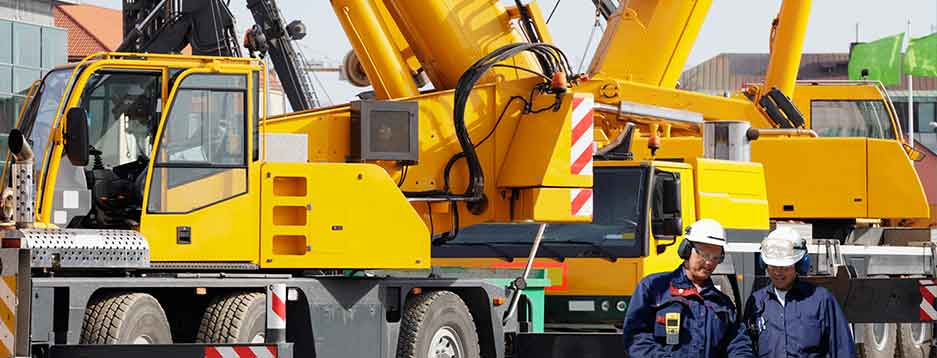
Heavy equipment plays a pivotal role in industries such as construction, mining, and logistics, contributing to more than 20% of total project costs globally in these sectors. According to industry reports, improper operation and inadequate maintenance of heavy machinery account for over 40% of workplace accidents annually.
This Heavy Equipment Operation, Safety, and Maintenance course is designed to address these challenges by equipping participants with the necessary skills and knowledge to ensure safe and efficient use of machinery while minimizing downtime and maximizing productivity.
The course is developed in line with international standards and regulations, including OSHA (Occupational Safety and Health Administration) guidelines for equipment safety, ISO 12100 and other relevant ISO standards for risk assessment and machinery safety, and Industry best practices and manufacturer recommendations for heavy equipment operation and maintenance.
By aligning with these standards, the course ensures participants are trained to meet legal and safety requirements while improving operational efficiency.
The Training Course Will Highlight ?
Training Objective
By the end of this course, participants will be able to:
1. Understand the types, functions, and applications of various heavy equipment like excavators, bulldozers, cranes, dump trucks, concrete mixers, compactors, etc.…).
2. Operate heavy machinery safely and efficiently in compliance with safety standards OSHA, ISO 12100, ISO 20474, etc…).
3. Identify and mitigate risks associated with heavy equipment operation.
4. Perform routine maintenance and troubleshooting to ensure equipment reliability.
5. Understand legal and regulatory requirements related to heavy equipment operation.
Target Audience
• Heavy equipment operators.
• Maintenance personnel responsible for servicing heavy machinery.
• Supervisors and managers overseeing heavy equipment operations.
• Health and safety officers in industries involving heavy machinery.
• Anyone aspiring to work in roles requiring heavy equipment operation.
• QA/QC Department.
Training Methods
The course uses a practical and interactive approach to ensure maximum engagement and knowledge retention, including:
• Classroom Sessions: Covering theoretical aspects, safety regulations, and equipment basics.
• Hands-On Practice: Providing real-world experience in operating various types of heavy equipment.
• Group Discussions: Encouraging collaboration and sharing of experiences.
• Case Studies: Analyzing real-life incidents to highlight the importance of safety and proper maintenance.
• Assessments: Conduct pre and post-quizzes and practical evaluations to measure participant understanding.
Daily Agenda
Module One: Introduction to Heavy Equipment and Safety Standards
• Types of heavy equipment and their applications.
• Overview of operational risks and hazards.
• Legal and regulatory requirements for heavy equipment.
Module Two: Safe Operation Practices
• Pre-operational checks and startup procedures (JSA, WORK PERMIT)
• Inspection and Audit (Internal and External)
• Safe handling of equipment in various environments.
• Emergency procedures and response planning (Emergency preparedness, common emergency situations and response, Evacuation procedure, communication in emergency, Post-incident response).
• Hazards and diseases associated with heavy machinery work (Noise, Crushing, Vibration, Dust, COPD, etc…).
Module Three: Maintenance and Troubleshooting
• Basic maintenance and servicing techniques.
• Identifying common equipment failures and their solutions.
• Documentation and record-keeping for maintenance.
• protective periodic maintenance
• Real-world scenarios for troubleshooting and maintenance.
Module Four: Advanced Topics and Practical Training
• Equipment-specific operational techniques.
• Practical sessions for operating different types of heavy machinery.
• Practical assessments and operator evaluations.
Accreditation
BTS attendance certificate will be issued to all attendees completing minimum of 75% of the total course duration.
Quick Enquiry
Request Info
Course Rounds
5 Days| Code | Date | Venue | Fees | Action |
|---|---|---|---|---|
| HSE116-05 |
2026-12-13
|
Manama
|
USD
5450
|
Register |
| HSE116-01 |
2027-01-17
|
Dubai
|
USD
5450
|
Register |
| HSE116-02 |
2027-05-03
|
Istanbul
|
USD
5950
|
Register |
| HSE116-03 |
2027-08-01
|
Cairo
|
USD
5450
|
Register |
| HSE116-04 |
2027-10-31
|
Riyadh
|
USD
5450
|
Register |
Prices don't include VAT
Related Courses
Your Growth, Our Mission
Contact Us
Contact us to meet all your inquiries and needs, as our professional team is pleased to provide immediate support and advice to ensure you achieve your goals and facilitate your experience with us in the best possible way. UAE
UAE
 Office
Mobile
Office
Mobile
 E-mail
 Working
Hours
Working
Hours