
Course Details
Your Growth, Our Mission
Course Description
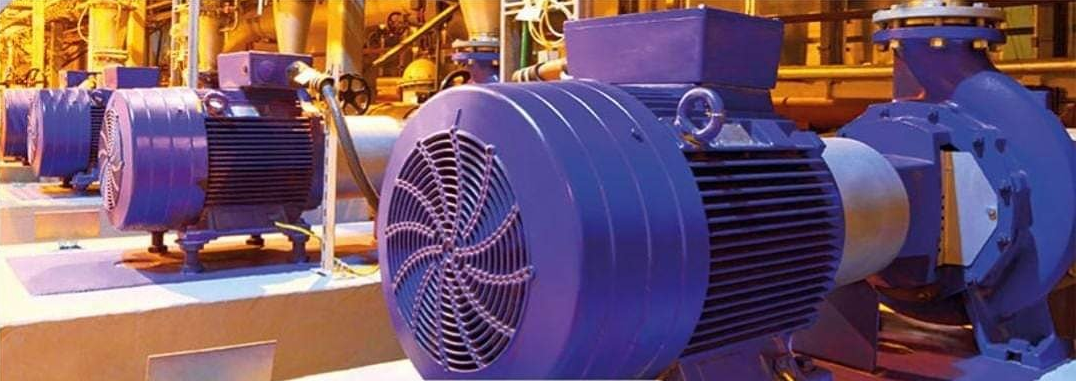
This course gives you a thorough understanding of electrical motor’s protection, control and maintenance and gives you the tools to maintain and troubleshoot electrical motors. You will gain a fundamental understanding of the protection, control and maintenance of electric motors and drives. Typical applications of electric motors in mining, manufacturing, materials handling and process control are covered in detail. The concluding section of the course gives you the fundamental tools in troubleshooting motors confidently and effectively.
The Training Course Will Highlight ?
By the end of this course delegates will be able to:
- Specify protection requirements for motors
- Maintain electrical motors
- Specify speed control requirements for motors
- Understand essentials of motors and drives
- Detail the main issues with testing of motors
- Prevent or at least minimize motor bearing failure
- Troubleshoot and fix faults on motors and drives
- Interface control circuits of motors with PLCs/DCSs
- Reduce downtime on electrical motors
- Improve plant safety & improve plant throughput
- Reduce your spares usage and requirements
Training Objective
At the end of this course, participants will be able to:
- Specify protection requirements for motors
- Maintain electrical motors
- Specify speed control requirements for motors
- Understand essentials of motors and drives
- Detail the main issues with testing of motors
- Prevent or at least minimize motor bearing failure
- Troubleshoot and fix faults on motors and drives
- Interface control circuits of motors with PLCs/DCSs
- Reduce downtime on electrical motors
- Improve plant safety & improve plant throughput
- Reduce your spares usage and requirements
Target Audience
Electrical consulting engineers, Electrical contractors, Electrical maintenance supervisors, Electrical maintenance technicians, Engineering and design personnel, Instrument and control engineers, Instrument technicians, Maintenance personnel, Mechanical engineers, Operations personnel, Plant engineers, Process control engineers, Service technicians
Training Methods
This interactive Training will be highly interactive, with opportunities to advance your opinions and ideas and will include;
- Lectures
- Workshop & Work Presentation
- Case Studies and Practical Exercise
- Videos and General Discussions
Daily Agenda
Fundamentals of Motor Technology & Construction
- Basic principles of rotating electric machines
- Fundamental principles of speed control
- Efficiency, torque, inertia, horsepower/power factor
- Torque-speed curves
- Induction/synchronous/wound rotor types
- Basic construction and physical configuration, windings
- Principles of operation and performance
Three Phase AC Induction Motors
- Components, Theory of operation, Induction motor design
- Duty cycles, Insulation and cooling requirements
- Starting methods, Selecting motors
- Types of faults, fault finding and testing of AC machines
- Testing instrumentation
Energy Losses & Efficiency of Three Phase AC Induction Motors
- Standards, Types of losses
- Tests for measurement and computation of losses and efficiency
- Dynamometers, Principles of load application by braking
- Torque measurement basics
- Types of practical dynamometers
Motor Failure Analysis
- Frequent starts, High inertia, Inadequate cooling
- Congestion on fan cover, Improper spacing at end of motor
- Incorrect belt alignment, Solid belt guards
- Excessive loading causing bearing clearance problems
- Insulation failures, Bearing current problems
Testing
- Insulation life and resistance, Polarisation index
- DC hipot, DC ramp test, AC hipot, Capacitance test
- Dissipation factor, Partial discharge
- Surge test, Mechanical testing
Bearing Failure Analysis
- Bearing failures, Grease and greasing, Belt drive aspects
- Balance, Storage issues, Service factor loading
Protection of Motors
- Thermal overload, Time constraints
- Early relays and new digital relays
- Starting and stalling conditions
- Over current/overload, Under-voltage/over-voltage
- Under frequency, Pole slip/out of step
- Loss of excitation, Inadvertent energisation
- Over fluxing, Stall protection/acceleration time/start up supervision
- Unbalanced supply voltages, Negative sequence currents
- De-rating factors, Earth faults – core balance
- Calculation of protective relay settings
Motor Control
- Power circuit, Control circuit, Full online voltage starting
- Reduced voltage starting, Delta-star, Resistance, Reactor
- Autotransformer, Soft start, Braking, Speed control, Reversing
Control System for AC Variable Speed Drives
- Overall control system, Power supply for the control system
- DC bus charging system, VSD control loops
- Vector control, Current feedback in AC variable speed drives
- Speed feedback from motor
Installation & Fault Finding
- General installation and environmental requirements
- Power supply connections and earthing
- Where to install contactors in power circuit
- Installation of AC converters into metal enclosures
Accreditation
BTS attendance certificate will be issued to all attendees completing a minimum of 80% of the total course duration.
Quick Enquiry
Request Info
Related Courses
Your Growth, Our Mission
Contact Us
Contact us to meet all your inquiries and needs, as our professional team is pleased to provide immediate support and advice to ensure you achieve your goals and facilitate your experience with us in the best possible way. UAE
UAE
 Office
Mobile
Office
Mobile
 E-mail
 Working
Hours
Working
Hours