

Course Details
Your Growth, Our Mission
Course Description
The root of petroleum reservoir management are to be found in the reservoir engineering, taken in its broadest sense as the technology that deals with the movement of fluid into, out of and through the geological formation of the earth by means of wells and well systems.
Although elements of petroleum reservoir management have been practiced almost since reservoirs were first recognized, the concept of an integrated approach took from only within the past one or two decades.
The course emphasizes that petroleum reservoir management depends upon teamwork and continuous interaction among team players whose expertise may include specializations such as geology, geophysics, drilling, logging, well behavior, recovery mechanisms, subsurface fluid behavior, production operation, facilities engineering, economics, decision strategy, environmental issues and other applicable subjects.
The Training Course Will Highlight ?
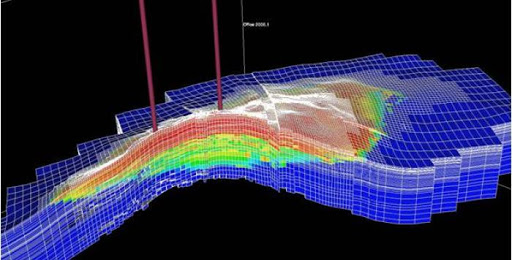
This course brings out the importance of the reservoir model and discusses its uses, not only as a tool for integrating the total database that is available on a reservoir, but also for predicting the consequences of alternate future constraints and implementation procedures that might be invoked. In sort, the individual reservoir has its formalized expression in the model that is constructed to simulate it.
Training Objective
By the end of this BTS training course, participants will be able to:
- Identify Reservoir Management techniques and best practices relating to the Development and Operation of Oil & Gas fields.
- Learn how to use such techniques and practices for the technical and economical optimization of Oil & Gas Assets and Resources and for maximizing value creation.
- Practice the various disciplines intervening in Reservoir Management, and learn how to lead multidisciplinary teams participating in Field Development and Operations.
- Visualize some of the reservoirs being studied during field trips and visit of outcrops
- Develop an understanding of the Fundamentals of Reservoir Engineering, from Geology to Hydrocarbon Recovery.
- Promote, on an international basis, Reservoir Engineering techniques and best practices relating to the Development of Oil and Gas fields.
- Provide experts in Hydrocarbons Resources Management the opportunity to practice other disciplines within an international team and develop professionals capable of leading multidisciplinary teams in Reservoir Development, Operations and Planning.
- Provide an exposure to a range of Gas Reservoir conditions through various case studies
Target Audience
Geologists, Geophysicists, Petrophysicists, Stratigraphers, Geochemists, Sedimentologists, Reservoir, Petroleum, Wellsite Geologists, Petroleum Engineers, Drilling Engineers, Reservoir Engineers, Production Engineers, Operations Engineers, Technologists, Log Analysts, E&P Personnel, Exploration & Development Personnel, Surveillance Engineers, Geologists, Reservoir Engineers, Seismic Interpreters, E&P Managers, Data Management and Oil & Gas Personnel.
Training Methods
This interactive Training will be highly interactive, with opportunities to advance your opinions and ideas and will include;
- Lectures
- Workshop & Work Presentation
- Case Studies and Practical Exercise
- Videos and General Discussions
Daily Agenda
Introduction:
- Sound Reservoir Management
- Scope and Objective
- Organization
Reservoir Management Concepts:
- Definition of Reservoir Management
- History of Reservoir Management
- Fundamentals of Reservoir Management
- Synergy and Team
- Integration of Geoscience and Engineering
- Integrating Exploration and Development Technology.
Reservoir Management Process:
- Setting Goals
- Developing Plan & Economics
- Implementation
- Surveillance and Monitoring
- Evaluation
- Revision of Plans & Strategies
- Reasons for Failure of Reservoir Management Program
- Reservoir Management Case Studies.
Data Acquisition, Analysis and Management:
- Data Types
- Data Acquisition and Analysis
- Data Validation
- Data Storing and Retrieval
- Data Application
- Example Data.
Reservoir Model:
- Role of Reservoir Model
- Geosciences
- Seismic Data
- Geostatistics
- Engineering
- Integration
- Case Studies.
Reservoir Performance Analysis and Forecast:
- Natural Producing Mechanisms
- Reserves, Volumetric Method
- Decline Curve Method
- Material Balance Method
- Mathematical Simulation
Reservoir Management Economics
- Economic Criteria
- Scenarios
- Data
- Economic Evaluation
- Risk and Uncertainties
- Economics Optimization Example.
Improved Recovery Processes
- Waterflooding
- Enhanced Oil Recovery Processes
- EOR Process Concepts
- Thermal Methods
- Chemical Methods, Miscible Methods
- EOR Screening Guidelines.
Reservoir Management Case Studies
- · North Ward Estes Field and Columbus Gray Lease
- · McAllen Ranch Field
- · Brassey Oil Field
- · Means San Andres Unit
- · Teak Field, Esso Malaysia Field
Reservoir Management Plans:
- · Newly Discovered Field
- · Secondary and EOR Operated Field
Accreditation
BTS attendance certificate will be issued to all attendees completing minimum of 80% of the total course duration.
Quick Enquiry
Request Info
Related Courses
Your Growth, Our Mission
Contact Us
Contact us to meet all your inquiries and needs, as our professional team is pleased to provide immediate support and advice to ensure you achieve your goals and facilitate your experience with us in the best possible way. UAE
UAE
 Office
Mobile
Office
Mobile
 E-mail
 Working
Hours
Working
Hours