

Course Details
Your Growth, Our Mission
Course Description
This course will provide participants with comprehensive theoretical and practical application of well test techniques to design and interpret transient well testing. An integrated approach to well test interpretation is emphasized throughout the course. Class exercises involving hand calculations and simple spreadsheet applications will reinforce the concepts covered in class. Concepts will be illustrated by both synthetic data sets and real field examples. Participants will be able to apply the knowledge and skills in their job assignments upon course completion. The course will deal with oil and gas, vertical and horizontal and fractured reservoirs test data. This course includes the use of computer programs.
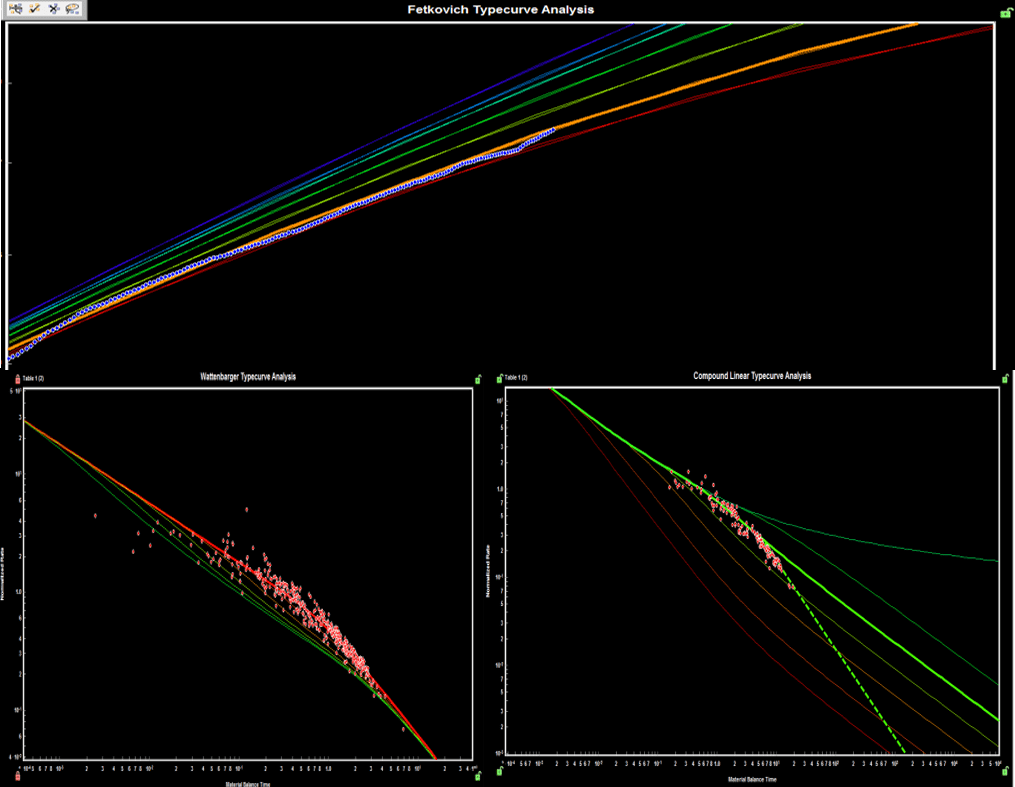
Moreover, it is built on the similarities of the basic theory behind Rate Transient Analysis (RTA) / Production Analysis (PA) / Modern Decline Analysis (MDA) and Pressure Transient Analysis (PTA). It discusses the basic theory behind PTA and RTA and the differences between assumptions and mathematical models. Modern Production Decline Analysis methods, PTA in shale plays, complementarity of RTA and PTA, effect of data quality on the analysis results are also covered.
The Training Course Will Highlight ?
Training Objective
YOU WILL LEARN HOW TO
- Interpret various types of tests data
- Analyze drawdown and buildup tests in oil and gas wells
- Identify flow regimes using the log-log diagnostic plot.
- Describe characteristic pressure behavior for common bounded reservoir geometries.
- Identify well test data affected by various wellbore and near-wellbore phenomena.
- Design a well test to meet desired objectives.
- Estimate average drainage area pressure.
- Analyze well tests in hydraulically fractured wells.
- Analyze well tests in horizontal wells.
- Analyze well tests in naturally fractured reservoirs.
- Recommend a well test design
- Know the various models applicable to well test interpretation
- Perform well test interpretation with a software package
Target Audience
The course is intended for Reservoir Engineers/ Petroleum Production, Project Manager, geoscientists and specialists in dynamic well test analysis and interpretation, who want to understand in deep well testing principles and interpretation techniques to design, analyze report, evaluate results or intelligently participate in the well testing process.
Training Methods
This interactive Training will be highly interactive, with opportunities to advance your opinions and ideas and will include;
- Lectures
- Workshop & Work Presentation
- Case Studies and Practical Exercise
- Videos and General Discussions
Daily Agenda
Day One: Principles of Pressure Transient Testing
- Introduction to Well Testing
- Objectives of well testing
- Well test concepts
- Principles of Well Test Analysis
- Steady state, semi-steady state, and transient well performance
- Radial flow equations, Diffusivity equations, Dimensionless variables
- Solutions of Diffusivity Equation
- Depth of Investigation, Stabilization time, Flow regimes
- Skin effect, Wellbore storage (WBS), Superposition principle
Day Two: Types of Well Testing/Single Well Testing Analysis
- Single well testing (PBU & DD)
- Analysis of well testing
- Well test interpretation approaches
- Horner approximation (Semi-log analysis)
- Skin factor and geometric skins Calculations
- Fault detection and distance determination
- Phase redistribution effects
- Well test design
Day Three: Determination of Average Reservoir Pressure
- Average Reservoir Pressure determination
- MBH method
- Odeh – Al Hussainy method
- Ramey-Cobb method
- MDH method
- The Extended Muskat method
- Detection of faults & other flow barriers
- Fissured reservoir – double porosity models
- Layered reservoir - double permeability model
- Introduction to Gas well testing
- Analysis of gas well testing data
Day Four: Types Curve Matching/Pressure Derivative Methods
- Fundamentals of types of curves
- Ramey t, Gringarten, McKinley, Bourdet et al. Derivative Type Curves
- Type curve matching technique
- Diagnostic and derivative analysis
- Introduction to well testing programs such as SAPHIR
- Drill Stem Test,
- Types of Drill Stem Tests
- DST Pressure Behavior, DST Analysis Methods, Uses, and Limitations
Day Five: Rate Transient Analysis
- Introduction to Rate Transient Analysis
- Empirical Method: Arp's Decline Analysis
- Fetkovich Type Curve Analysis
- Advanced Methods
- Blasingame
- Agarwal & Gardner
- Normalized Pressure Integral (NPI)
- Flowing Material Balance Analysis
Final Assessment Exam
Accreditation
BTS attendance certificate will be issued to all attendees completing minimum of 80% of the total course duration.
Quick Enquiry
Request Info
Related Courses
Your Growth, Our Mission
Contact Us
Contact us to meet all your inquiries and needs, as our professional team is pleased to provide immediate support and advice to ensure you achieve your goals and facilitate your experience with us in the best possible way. UAE
UAE
 Office
Mobile
Office
Mobile
 E-mail
 Working
Hours
Working
Hours