

Course Details
Your Growth, Our Mission
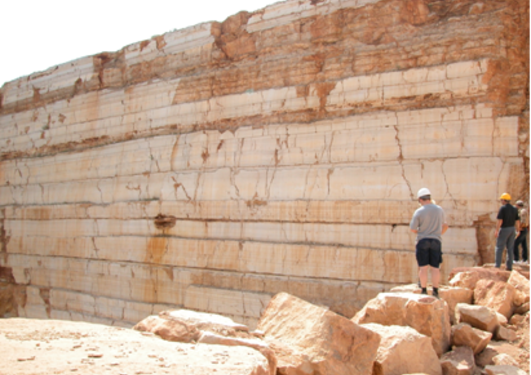
Course Description
Carbonate reservoirs are considered to be the most significant source of hydrocarbon production for this century. This course is offered to provide an introduction to carbonate reservoir evaluation through use of academic and industry course material. Basic terminology and concepts will be taught through lectures, group work and self study assignments: the geology and diagenesis of carbonates, sequence stratigraphy, Petrophysics and seismics in carbonates and basic reservoir engineering and well testing. Examples of different carbonate reservoirs will be used to demonstrate the importance of integrating engineering and geoscience data and understanding in effective reservoir management.
Reservoir characterization involves the understanding and methods used to characterize reservoir heterogeneity. This course provides a special focus on carbonate reservoir properties in constructing realistic 3D images of its geological and petrophysical properties. The course covers an extensive amount of case studies from various geological fields. This will also provide methods in the predicting reservoir performance in an integrated approach through reservoir geology, Petrophysics, and reservoir engineering.
The Training Course Will Highlight ?
This course aims to give participant an overview of the carbonate reservoir characterization process. At the end of this course, the candidates should be able to classify carbonate rocks, interpret depositional systems and components and their implications for reservoir rock quality and distribution, understand basic diagenetic processes and their influences on reservoir properties and porosity distribution, Understand and apply carbonate seismic stratigraphy and sequence stratigraphy, understand carbonate rock type and rock type distribution, and finally have a basic knowledge of the workflow to build 3D reservoir model.
Training Objective
By the end of this course delegates will be able to:
-
- Understand the affecting characteristics of carbonates in reservoir characterization
- Learn the application of carbonate sequence stratigraphy to reservoir characterization
- Relate seismic and log data to reservoir properties (reservoir characterization)
- Manage risk factors and error margins in predicting depositional environments
- Integrate different data sets for geology, Petrophysics, and reservoir engineering application
Target Audience
Geologists, Geophysicists, Petrophysicists, Stratigraphers, Geochemists, Reservoir, Petroleum, Wellsite Geologists, Petroleum Engineers, Drilling Engineers, Reservoir Engineers, Production Engineers, Operations Engineers, Technologists, Log Analysts, E&P Personnel, Exploration & Development Personnel, Geologists, Reservoir Engineers, Seismic Interpreters, E&P Managers, Data Management and Oil & Gas Personnel
Training Methods
This interactive Training will be highly interactive, with opportunities to advance your opinions and ideas and will include;
- Lectures
- Workshop & Work Presentation
- Case Studies and Practical Exercise
- Videos and General Discussions
Daily Agenda
Course Outline:
-
- Introduction to carbonates
- Carbonates vs. clastics
- Carbonate factories
- Platform types and controls
- Facies classification
- Diagenesis & fracturing
- Rock typing
- Focus on volumetrics uncertainties
- Seismic reflection issues
- Fluid contacts
- Net-to-gross in carbonates
- Average porosity issues
- Hydrocarbon saturation issues
- Reservoir characterization and recovery
- Heterogeneities in carbonates
- Stratigraphic framework
- Carbonate sequence stratigraphy
- Non-stratiform heterogeneities (e.g. fractures, karst)
- Rock types
- Upscaling issues
- Static modeling concepts
- Recovery techniques in carbonates
- Differences in carbonate reservoirs through geologic time and implications for reservoir potential
- Modern carbonate depositional environments
- Aeolian deflation
- Evaporites
- Modern and ancient microbial mats
- Carbonate grains and limestone classifications
- Study techniques
- Key principles and features of seismic attributes
- Reefs
- Carbonate sands
- Bioturbation
- Resedimented carbonates
- Sequence stratigraphy
- Diagenesis
- Ancient carbonate sequences
- Reservoir characterization
- Carbonate source rocks
- Case studies of carbonate fields
Accreditation
BTS attendance certificate will be issued to all attendees completing minimum of 80% of the total course duration.
Quick Enquiry
Request Info
Related Courses
Your Growth, Our Mission
Contact Us
Contact us to meet all your inquiries and needs, as our professional team is pleased to provide immediate support and advice to ensure you achieve your goals and facilitate your experience with us in the best possible way. UAE
UAE
 Office
Mobile
Office
Mobile
 E-mail
 Working
Hours
Working
Hours