

Course Details
Your Growth, Our Mission
Course Description
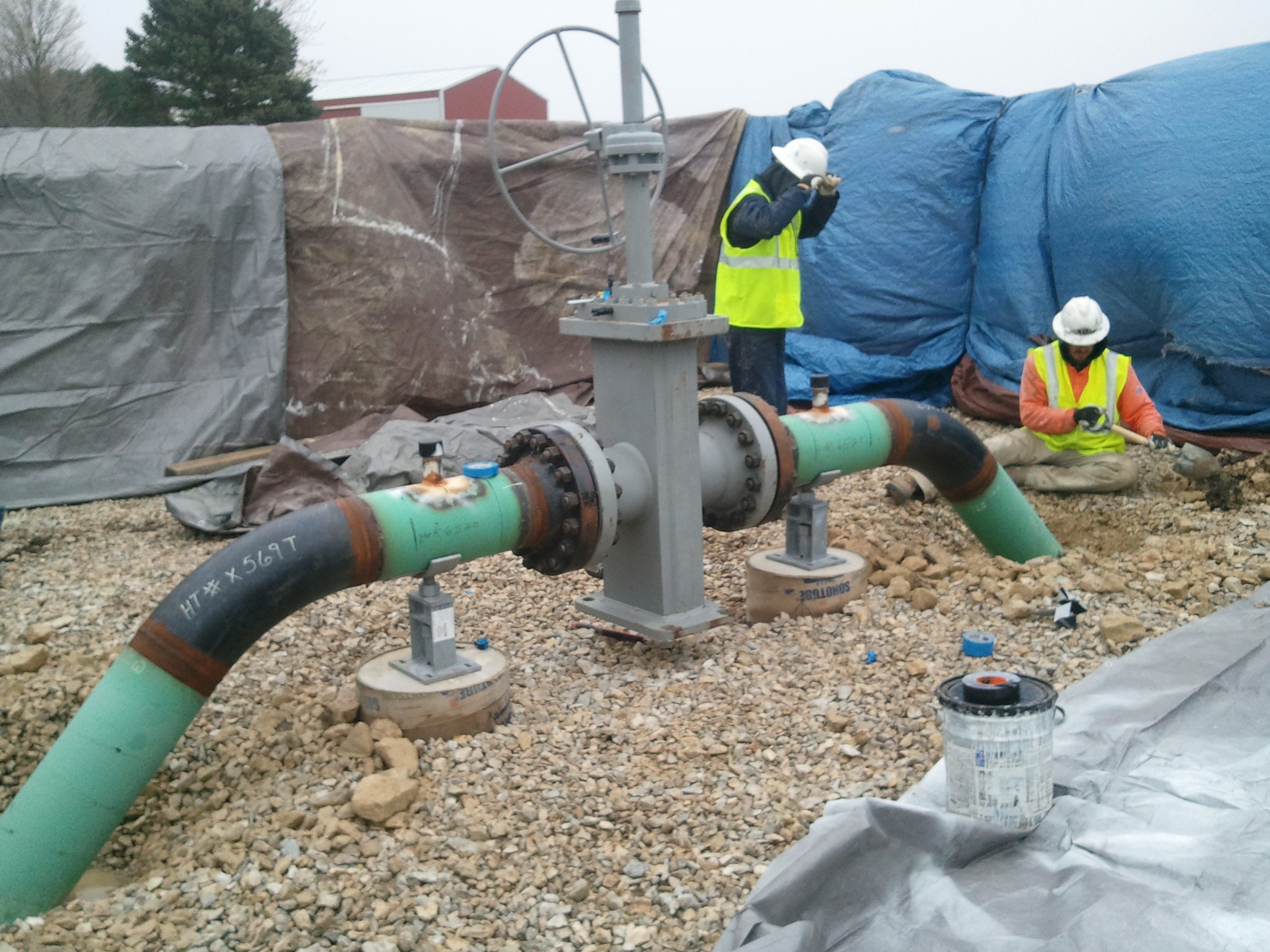
Maintaining the ageing infrastructure such as underground pipelines is a challenge to facility owners worldwide. Understanding why and how cathodic protection works or fails can help the operator formulate appropriate strategy in managing the pipeline corrosion problems.
The Training Course Will Highlight ?
This course covers both the fundamentals and practices in designing, operating and maintaining cathodic protection of underground pipelines. An overview of the NACE standard on Pipeline External Corrosion Direct Assessment Methodology will also be presented.
Training Objective
By the end of this course, delegates will be able to:
- Have an in-depth technical knowledge of cathodic protection methodology
- Understand cathodic protection system design and the associated parameters
- Understand principles of corrosion and corrosion control
- Monitor and manage of CP protected structures
- Learn about instrumentation for cathodic protection of underground pipelines
- Know about cathodic protection of underground pipelines
- Know about stray current corrosion and methods of prevention
- Learn how to apply pipeline coatings
- Understand field joint coatings
- Learn about pipeline inspection, survey methods and evaluation techniques
Target Audience
Corrosion Control Engineers & Personnel, Process Engineers, Metallurgists, Inspection Personnel, Mechanical Engineers, Material Selection Personnel, Plant Contractors, Operations Engineers, Team Leaders & Supervisors, Maintenance Engineers, Maintenance Supervisors, Senior Plant Supervisors, Mechanical Engineers, Corrosion Control & Monitoring Systems Personnel, Equipment Engineers, Maintenance Engineers and Planners, Team Leaders, Managers & Coordinators, Construction Coordinators, Technologists, Safety Officers, Maintenance Team Leaders & Engineers, Design Engineers, Service Company Representatives, Oil and Gas Production Facilities Personnel, Chemists, Chemical Engineers, Inspectors and Inspection Engineers & Supervisors, Technicians and Supervisors, Environmental Specialists, New Petroleum Engineers, Asset Management Personnel, Construction Engineers, Refinery Chemists, Chemical Engineers, Personnel who are / will be responsible for detecting, inspecting, monitoring, controlling corrosion in oil and gas piping, pipelines used in production operations and Personnel responsible for metallurgy, corrosion or the prevention of failures in plant and equipment.
Training Methods
Daily Agenda
Primer on Chemistry and Metallurgy
Fundamentals of Corrosion
- Why do metals corrode
- How do metals corrode
- Corrosion in the underground environment
- General methods of corrosion control and prevention
Cathodic Protection
- Introduction
- How it works
- Why it works
- How effective it is
- Sacrificial anode cathodic protection
- Anode materials
- Anode design
- Impressed current cathodic protection
- Consumable ICCP anodes
- Permanent ICCP anodes
- Power sources
- Cables and connections
- Criteria for cathodic protection
Instrumentation for Cathodic Protection of Underground Pipelines
- Reference potential devices
- Potential measuring instrument
- Soil resistivity test instruments
- Wall thickness and pit gages
- Current interrupters
- Test rectifiers
- Holiday detectors
Cathodic Protection of Underground Pipelines
- CP design fundamentals
- Current requirement estimating methods
- Calculation of CP circuit resistance
- Calculating system capacity and life
- The 10-step guides to the design of galvanic anode CP system
- The 10-step guide to the design of ICCP system
Stray Current Corrosion and Methods of Prevention
- Sources of stray current
- Detecting stray current
- Effects of stray current on metallic structures
- Mitigation of interference effects from impressed current cathodic protection systems
- Other sources of DC stray current
Pipeline Coatings
- Desirable characteristics of pipeline coatings
- Type of pipeline coatings
- Pipeline coatings selection
- Specification and inspection
- Coating failures and analysis
Field Joint Coatings
- Pipeline field joint coatings
- Factory-applied vs. field-applied
- Pipeline coatings types
- Field joint coatings
- FJC types
- FJC performance
- FJC selection
- FJC application procedures
- FJC application examples
Cathodic Protection and Coatings
Pipeline Inspection: Survey Methods and Evaluation Techniques
- Survey methods for pipeline not under cathodic protection
- Survey methods for pipeline under cathodic protection
- Overview of NACE Standard on Pipeline External Corrosion Direct Assessment Methodology
- Long range ultrasonic testing (LRUT) technique for pipeline integrity survey
- Definition: what is LRUT
- Conventional UT vs. LRUT
- How LRUT works
- Advantages and limitations of LRUT
- Application examples
- Emerging technology for cathodic protection current measurement from inside the pipeline
- Introduction to CPCM technology
- Conventional CP current measurement methods vs. CPCM
- How CPCM works
- Advantages and limitations of CPCM
- Application examples
Accreditation
BTS attendance certificate will be issued to all attendees completing minimum of 75% of the total course duration.
Quick Enquiry
Request Info
Related Courses
Your Growth, Our Mission
Contact Us
Contact us to meet all your inquiries and needs, as our professional team is pleased to provide immediate support and advice to ensure you achieve your goals and facilitate your experience with us in the best possible way. UAE
UAE
 Office
Mobile
Office
Mobile
 E-mail
 Working
Hours
Working
Hours