
Course Details
Your Growth, Our Mission
Course Description
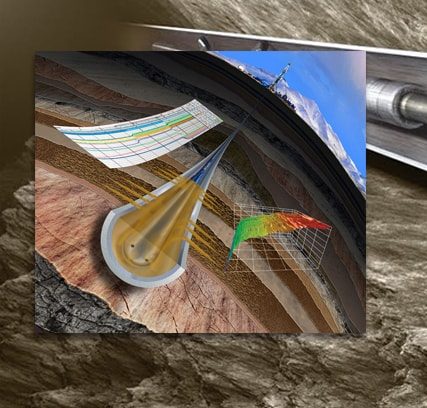
The course illustrates that production logging PLT refers to a suite of logs that are normally run on completed injection or production wells to evaluate the performance of the well itself or of the reservoir as a whole. Production logging PLT identify down hole fluid movements, optimize production and ensure the most cost-effective hydrocarbon abstraction in order to provide the data enabling to maximize oil or gas recovery from reservoirs. The course give deep understanding in applying the functioning of modern production logging PLT tools and techniques using a number of actual log examples. This course will cover fluid flow in pipes (both single and multiphase flow), the theoretical bases of interpretation of production logging PLT.
The Training Course Will Highlight ?
This course will cover fluid flow in pipes (both single and multiphase flow), the theoretical bases of interpretation of production logging PLT.
Training Objective
By the end of this course delegates will be able to:
- Learn how to look behind pipe or casing to evaluate the formation and its fluids in the near well vicinity
- Understand how to identify downhole fluid movement
- Know the use, limitations and results yield of a variety of production logging tools, including spinner, temperature, noise, fluid injections and other tools as well as the operational considerations
- Learn and understand flow of fluids in vertical and deviated wells
- Know the interpretation of each tool acquired data and how quality is affected by the acquisition process
- Understand the principles on which production log interpretations are based with hands-on examples and an in-class workshop on interpreting Mono and Multiphase flow using production logs
- Gain knowledge on casing integrity problems and cement-casing bond problems and methods of detection
- Learn about time lapse logs and their application to monitor reservoir development during production
Target Audience
Geologists, Geophysicists, Petrophysicists, Stratigraphers, Geochemists, Sedimentologists, Reservoir, Petroleum, Wellsite Geologists, Petroleum Engineers, Drilling Engineers, Reservoir Engineers, Production Engineers, Operations Engineers, Technologists, Log Analysts, E&P Personnel, Exploration & Development Personnel, Surveillance Engineers, Geologists, Reservoir Engineers, Seismic Interpreters, E&P Managers, Data Management and Oil & Gas Personnel
Training Methods
This interactive Training will be highly interactive, with opportunities to advance your opinions and ideas and will include;
- Lectures
- Workshop & Work Presentation
- Case Studies and Practical Exercise
- Videos and General Discussions
Daily Agenda
Course Outline:
-
- Introduction to advanced production evaluation logging
- Roles of formation evaluation and production zonal contributions for enhanced reservoir management
- Gamma Ray (GR) Logging
- Pulsed Neutron Capture (PNC) Logs
- Determination of bulk formation capture cross section by logging tools
- Development of the capture technique and log presentation
- Using X-Plots for determining water saturation from sigma
- Detection of Water Flow by Oxygen Activation using PNC tools
- Carbon-Oxygen Measurements
- New tools (RST (Schlumberger), RPM (Baker)
- RMT (Halliburton), RAPTOR (Weatherford)
- Others (Hunter, Scientific Drilling, Hot Well)
- Determination of saturation and holdup for the RST
- Specialized PNC/PNS applications
- Baker Atlas “Gas View”, for enhanced gas detection
- PNC/PNS job planning program and preparation
- Through-Casing Resistivity
- Formation Testing Through Casing
- Continuously Run Spinner Flowmeters in Vertical Wells
- Spinner response under ideal conditions
- Interpretation of Spinner Logs for Bulk Production Profile
- Fluid Identification Devices for Multiphase Flow
- Pressure differential tools (Gradiomanommeter)
- Productivity Index
- Inflow Performance
- Zonal Production
- Requirements to solve for three phase flow
- Multiphasic flow in deviated wells
- Tools to deal with the deviated multiphase flow environment
- The problem of large diameter casing with low multiphase flow
- High Deviation Angle and Horizontal Multiphase Flow
- Visualization of horizontal flow
- Pulsed Neutron Holdup Indicator (PNHI/RPM)
- Multi Capacitance
- Flow Meter (MCFM)
- Independent Horizontal Flow Tools strings
- Spinner Array Tool (SAT)
- Capacitance Array (CAT)
- Resistance Array (RAT)
- Conveying tools in the horizontal/highly deviated environment
- Temperature Logging
- Temperature logs in producing wells
- Temperature logs in injection wells
- Noise Logs
- Stationery noise and frequency measurements
- Radioactive Tracer Logging
- Quantitative Injection Profiling
- Velocity Shot Technique
- Distributed Fiber Optic Temperature Sensing (DTS)
- Distributed Fiber Optic Acoustic Sensors (DAS)
Accreditation
BTS attendance certificate will be issued to all attendees completing minimum of 80% of the total course duration.
Quick Enquiry
Request Info
Related Courses
Your Growth, Our Mission
Contact Us
Contact us to meet all your inquiries and needs, as our professional team is pleased to provide immediate support and advice to ensure you achieve your goals and facilitate your experience with us in the best possible way. UAE
UAE
 Office
Mobile
Office
Mobile
 E-mail
 Working
Hours
Working
Hours