

Course Details
Your Growth, Our Mission
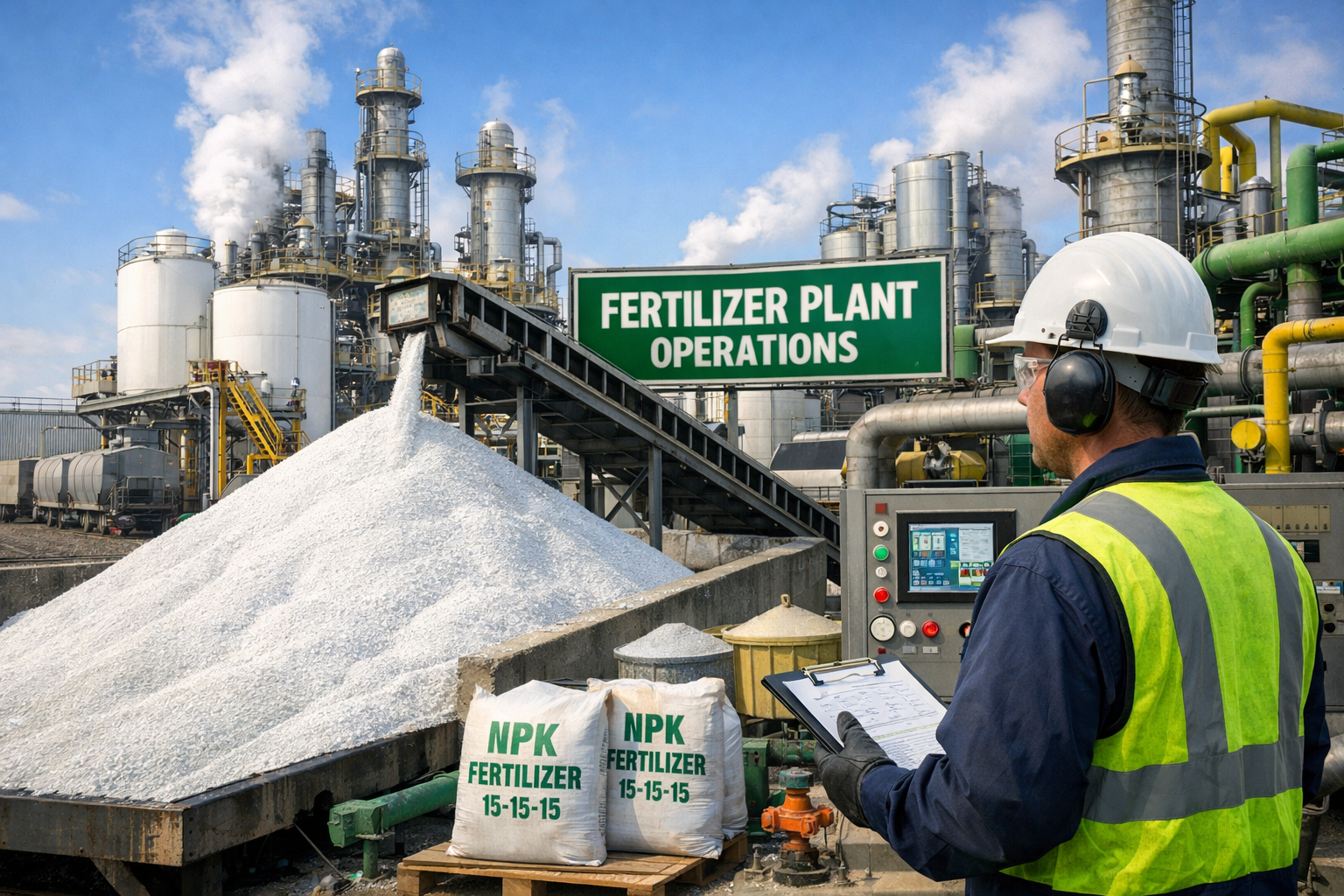
Course Description
This comprehensive 5-day training program provides participants with a practical and technical
understanding of fertilizer plant operations, focusing on key process units and their
integration in modern fertilizer production facilities.
The course covers methanation, carbon monoxide and shift conversion, desorption
and hydrolyzation, and desulphurization systems—all critical to ensuring feed gas
purification, conversion efficiency, and product quality.
Emphasis will be placed on system operation, troubleshooting, and optimization,
supported by real-world examples from operating fertilizer plants.
The Training Course Will Highlight ?
Training Objective
By the end of this course, participants will be able to:
• Understand the overall process flow and interconnection of major fertilizer plant units.
• Operate and monitor Methanation Systems for feed gas purification.
• Explain the operation and importance of Carbon Monoxide and Shift Conversion
Systems.
• Describe the functions and control parameters of Desorption and Hydrolyzation
Systems.
• Operate and troubleshoot Desulphurization Systems effectively.
• Apply operational best practices to enhance process safety, reliability, and efficiency.
Target Audience
- Control Room Operators
- Field Operators
- Process Supervisors
- Production and Process Engineers involved in fertilizer operations
Training Methods
- Lectures
- Workshop & Work Presentation
- Case Studies and Practical Exercise
- Videos and General Discussions
Daily Agenda
Day 1 – Introduction to Fertilizer Plant Operations
• Overview of fertilizer production processes and technologies
• Major process stages: feed purification, synthesis, and finishing
• Process flow diagram (PFD) review of a typical fertilizer plant
• Plant utilities and supporting systems (steam, air, water, etc.)
• Role of operators in maintaining safe and stable plant performance
• Overview of key operational parameters and performance indicators
Day 2 – Methanation System Operation
• Purpose of methanation in feed gas preparation
• Process chemistry and reactions involved
• System configuration and key components
• Operating conditions and control parameters
• Catalyst function and protection
• Common operational issues (e.g., high CO slip, temperature control) and
troubleshooting methods
• Case study: optimizing methanation efficiency
Day 3 – Carbon Monoxide and Shift Conversion System Operation
• Overview of CO and shift conversion in fertilizer production
• Reaction principles: CO + H₂O → CO₂ + H₂
• Types of shift converters (high-temperature and low-temperature)
• Process control and heat management
• Catalyst activity monitoring and replacement considerations
• Troubleshooting: carbon deposition, temperature spikes, and CO breakthrough
• Best practices for maintaining conversion efficiency
Day 4 – Desorption and Hydrolyzation System Operation
• Purpose of desorption and hydrolyzation in gas treatment systems
• Process flow and major equipment overview
• Hydrolysis reaction mechanisms and design considerations
• Operating parameters and system control
• Common performance issues and corrective actions
• Integration with CO₂ removal and purification systems
• Practical examples from operating fertilizer plants
Day 5 – Desulphurization System Operation and Course Review
• Importance of sulfur removal in feed preparation
• Types of desulphurization systems (chemical and physical absorption)
• Reaction mechanisms and catalyst types
• Monitoring system performance and managing breakthrough
• Troubleshooting: sulfur slip, pressure drop, and regeneration problems
• Overall plant integration and performance optimization
• Comprehensive course review and Q&A discussion
Accreditation
BTS attendance certificate will be issued to all attendees completing minimum of 80% of the total course duration
Quick Enquiry
Request Info
Course Rounds
5 Days| Code | Date | Venue | Fees | Action |
|---|---|---|---|---|
| PE254-05 |
2026-11-01
|
Cairo
|
USD
5450
|
Register |
| PE254-01 |
2027-01-10
|
Dubai
|
USD
5450
|
Register |
| PE254-02 |
2027-06-07
|
Istanbul
|
USD
5950
|
Register |
| PE254-03 |
2027-08-01
|
Cairo
|
USD
5450
|
Register |
| PE254-04 |
2027-11-15
|
Kuala-Lumpur
|
USD
5950
|
Register |
Prices don't include VAT
Related Courses
Your Growth, Our Mission
Contact Us
Contact us to meet all your inquiries and needs, as our professional team is pleased to provide immediate support and advice to ensure you achieve your goals and facilitate your experience with us in the best possible way. UAE
UAE
 Office
Mobile
Office
Mobile
 E-mail
 Working
Hours
Working
Hours