

Course Details
Your Growth, Our Mission
Course Description
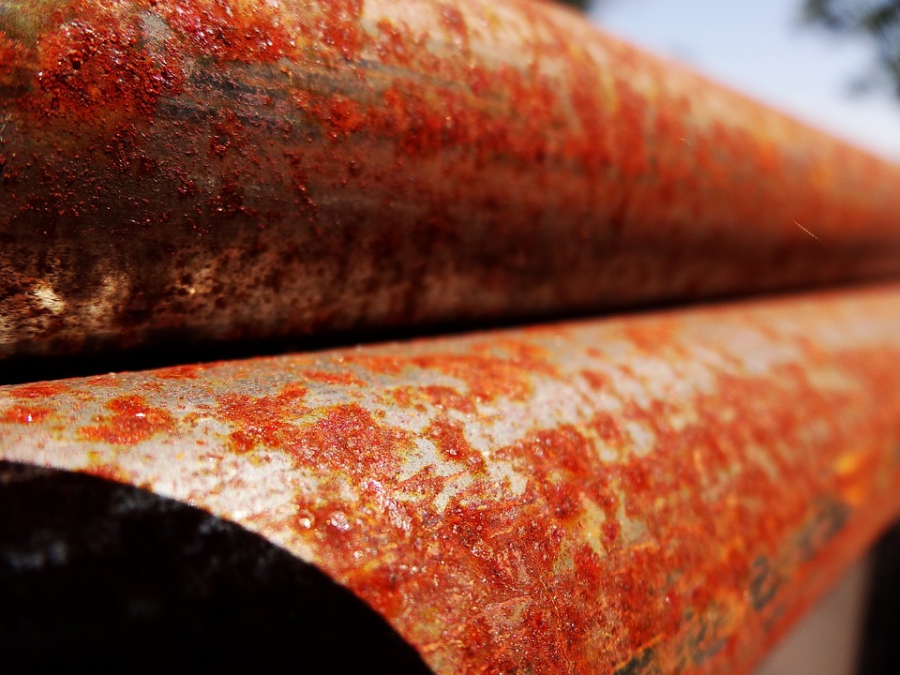
Corrosion is both costly and dangerous. Billions of dollars are spent annually for the replacement of corroded structures, machinery, and components.
Premature failure of bridges or structures due to corrosion can also result in human injury, loss of life, and collateral damage.
Taking all these factors into account, it becomes obvious why those persons involved with the design and/or maintenance of structures and equipment should have a basic understanding of the corrosion process.
The Training Course Will Highlight ?
Training Objective
Corrosion is responsible for the failure of many systems and structures. This course describes the importance of corrosion problems in relation to material cost, reduced performance, reliability, and impact on the environment. The course covers the basics of what makes environments corrosive, with an introduction to corrosion chemistry, to corrosion thermodynamics, and to the electrochemical theory that relates corrosion current with mass and thickness loss rates of various materials. Forms of corrosion are described in relation to environmental accidents and to methods commonly used to control corrosion. Examples of corrosion in water, soils, and in various atmospheres are also used to introduce these prevention techniques.
At the end of the course the participant will:
-
- Understand the Corrosion Terminology, cause and cost.
- Understand the chemistry and electrochemistry of corrosion of metals.
- Identify different forms of corrosion.
- Understanding the Corrosion Mechanisms.
- Use the available data from the literature to predict the possibility of corrosion of a certain metal in a certain medium.
- Able to calculate the rate of corrosion.
- Able to select suitable methods for protection from corrosion.
- Able to select materials and designs that would withstand corrosion in a certain environment.
- Able to select methods for metal Corrosion protection.
- Able to select a suitable corrosion inhibitor to protect the metal from corrosion.
- Know the forms of Corrosion in oil and gas industry and deal with them.
- Gain a good knowledge about tests of corrosion and use them to evaluate different forms of corrosion.
Target Audience
This course is designed for professionals involved in material degradation prevention, failure analysis, and asset integrity management across industries:
-
- Corrosion Engineers & Materials Scientists
- Water Treatment & Utility Engineers
- Integrity & Reliability Engineers
- Oil & Gas/Petrochemical Specialists
- Marine & Offshore Technologists
- Coatings & Corrosion Control Specialists
- Academic Researchers
Training Methods
A highly interactive combination of lectures and discussion sessions as well as case studies will be managed to maximize the amount and quality of information, knowledge, and experience transfer.
The sessions will start by raising the most relevant questions and motivating everybody to find the right answers. The attendants will also be encouraged to raise more of their questions and to share developing the right answers using
their analysis and experience.
Course material through PowerPoint equipped with necessary animation, learning videos, and general discussions will be provided.
PERCENTAGE OF DELIVERY METHODOLOGIES
-
- 35% Presentation
- 30% Group & individual exercises
- 25% Case studies and role-plays
- 10% Active movies and videos
Daily Agenda
Day One
Introduction to Corrosion
-
- Definitions of Corrosion Terminology
- Causes of metal corrosion
- Cost of corrosion
- Economic Losses
- Direct losses
- Indirect losses
- Conservation Losses
Basic of Electrochemistry
-
- Electrochemistry principles
- Galvanic cells
- Cell Potential
- Standard Reduction Potentials
- Standard Cell Potentials
- The Gibbs free energy
- Electrolytic cells
- Electroplating
- Redox reactions
Corrosion Mechanisms
-
- Types of Corrosion Mechanisms
- Chemical corrosion (direct corrosion)
- Electrochemical corrosion (indirect corrosion)
- Corrosion Mechanisms
- Corrosion Cell Potentials
- Potential–pH Diagrams (Pourbaix diagrams)
- The potential – pH diagram for an Fe – Η2Ο system
- Corrosion Rate Measurement
- Corrosion Rate Expressions
Day Two
Forms of Corrosion: General Uniform Corrosion
-
- Conditions Causing Uniform Corrosion
- Mechanism of Uniform Corrosion
- Evaluation of Uniform Corrosion
- Examples of Uniform Corrosion
- Uniform Corrosion Protective Measures
Intergranular Corrosion and Galvanic Corrosion
-
- Intergranular Corrosion terminology
- Conditions Causing Intergranular Corrosion
- Intergranular Corrosion Protective Measures
- Galvanic Corrosion terminology
- Conditions Causing Galvanic Corrosion
- Galvanic series
- Factors affecting galvanic corrosion
- Galvanic Corrosion Preventive Measures
Crevice Corrosion and Pitting Corrosion
-
- Crevice Corrosion terminology
- Conditions Causing Crevice Corrosion
- Crevice Corrosion Protective Measures
- Pitting Corrosion terminology
- Conditions Causing Pitting Corrosion
- Pitting Corrosion mechanism
- Types of Pitting Corrosion
- Trough Pitting Corrosion
- Sideway Pitting Corrosion
- pitting Corrosion Protective Measures
Day Three
Erosion Corrosion and Stress Corrosion Cracking (SCC)
-
- Erosion Corrosion terminology
- Conditions Causing Erosion Corrosion
- Erosion Corrosion mechanism
- Factors affecting Erosion Corrosion
- Erosion Corrosion Protective Measures
- Stress Corrosion Cracking (SCC) terminology
- Conditions Causing Stress Corrosion Cracking (SCC)
- Stress Corrosion Cracking (SCC) mechanism
- Stress Corrosion Cracking (SCC)Protective Measures
Selective Leaching and Biological Corrosion
-
- Selective Leaching Corrosion terminology
- Conditions Causing Selective Leaching Corrosion
- Selective Leaching Corrosion mechanism
- Types of Dezincification
- Crevice Corrosion Protective Measures
- Biological Corrosion terminology
- Conditions Causing Biological Corrosion
- Biological Corrosion Protective Measures
Factors affecting the rate of corrosion
-
- Effect of temperature
- Effect of pH
- Effect of solution stirring
- Effect of metallurgical factors
- Effect of dissolved salts
Day Four
Corrosion protection methods
-
- Sacrificial barrier
- Inert barrier
- perfect barrier
- Proper equipment design
- Selection of the right material of construction
- Surface coating
- Metallic coating
- Electroplating
- Hot dipping of the work piece in molten metal
- Non-metallic coating
Cathodic Protection
-
- Galvanic cathodic protection (GCP)
- Impressed Current Cathodic Protection (ICCP)
- Measuring Criteria for Cathodic Protection
- 100mV of polarization criteria
- 850 mV Off potential criteria
Corrosion Inhibitors
-
- Cathodic Inhibitors
- Anodic Inhibitors
- Mixed inhibitors
- Volatile corrosion inhibitors (VCI)
- Water Soluble Corrosion Inhibitors
- Oil Soluble Corrosion Inhibitors
Corrosion in oil and gas industry
-
- Sweet corrosion (CO2 corrosion)
- Sour corrosion (H2S corrosion)
- Crevice corrosion
- Erosion corrosion
- Microbiologically induced corrosion
- Sweet and Sour Corrosion
Day Five
CORROSION TESTING
-
- Determination of iron in water
- Immersion Testing ASTM G31
- Pitting and Crevice Corrosion Resistance ASTM G48 Test
- Visual Examination
- pitting corrosion Test
- Salt Spray / Fog Testing
- Copper Strip Corrosion Test
- Cyclic Testing
- pH measurement
- SCC as per ASTM G36
- Corrosion Coupons
- Ultrasonic Thickness Monitoring
- Electrical Resistance Testing
Accreditation
-
BTS attendance certificate will be issued to all attendees completing minimum of 80% of the total course duration.
Quick Enquiry
Request Info
Related Courses
Your Growth, Our Mission
Contact Us
Contact us to meet all your inquiries and needs, as our professional team is pleased to provide immediate support and advice to ensure you achieve your goals and facilitate your experience with us in the best possible way. UAE
UAE
 Office
Mobile
Office
Mobile
 E-mail
 Working
Hours
Working
Hours