
Course Details
Your Growth, Our Mission
Course Description
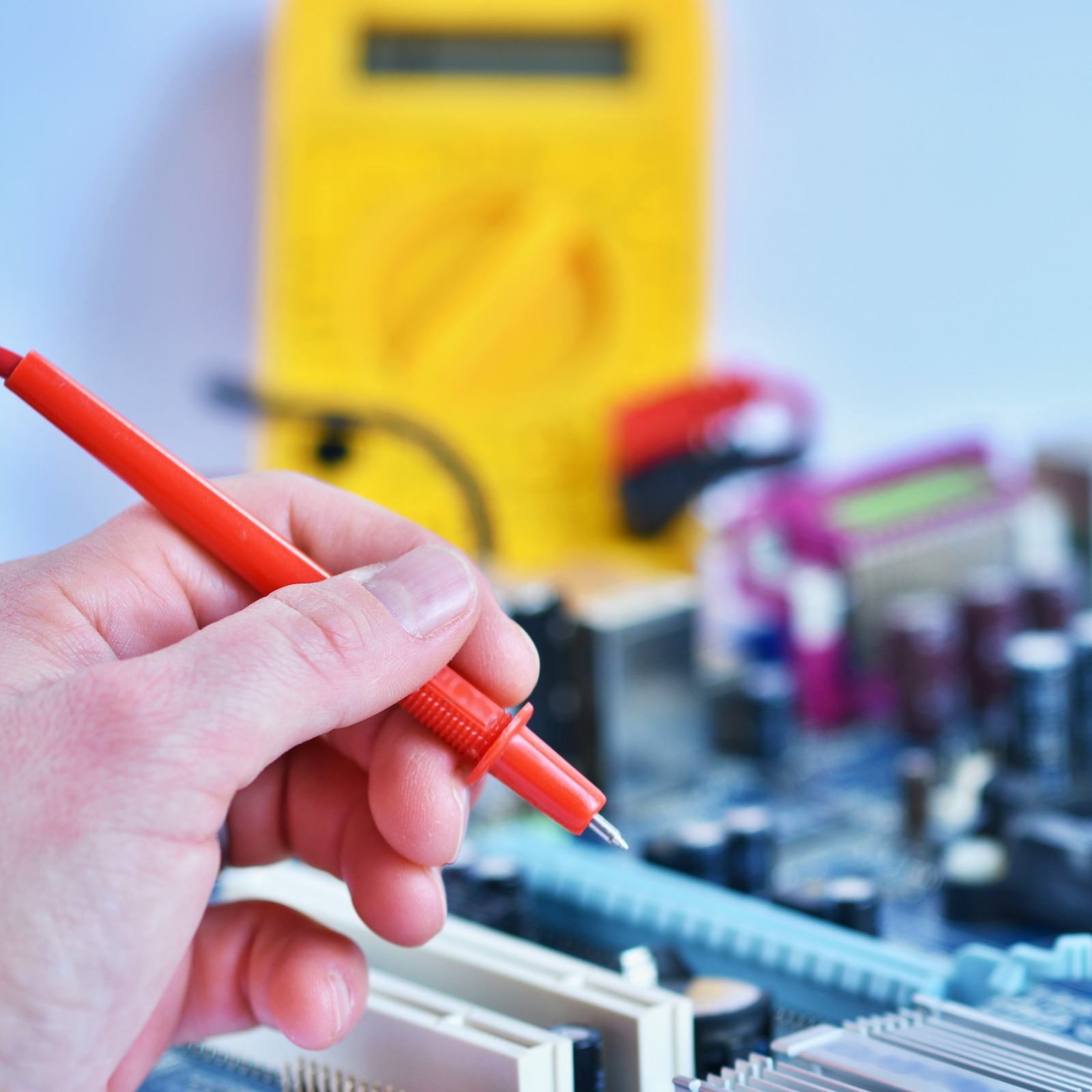
This course focuses on understanding, analyzing, and mitigating power quality issues in electrical systems using the Fluke 435 Power Quality Analyzer. It provides hands-on experience in identifying power quality disturbances such as voltage sags, transients, harmonics, and flicker. Scholars will learn to interpret data from Fluke 435 and apply industry-standard techniques for solving power quality problems in industrial, commercial, and residential environments.
The Training Course Will Highlight ?
Prerequisites:
- Basic Electrical Engineering
- Circuit Analysis
- Power Systems
Training Objective
Upon completion of this course, students will be able to:
- Understand the fundamentals of power quality and its importance.
- Operate the Fluke 435 Power Quality Analyzer for diagnosing power quality issues.
- Analyze and interpret real-world power quality data.
- Identify and mitigate common power quality problems such as voltage sags, harmonics, transients, and flicker.
- Understand industry standards and regulations related to power quality.
- Apply power quality analysis techniques in industrial, commercial, and residential systems.
Target Audience
- Electrical Engineers
- Power Quality Engineers
- Power Systems Protection Engineers
- Instrumentation and Control Engineers
Training Methods
This interactive Training will be highly interactive, with opportunities to advance your opinions and ideas and will include:
- Lectures
- Workshop & Work Presentation
- Case Studies and Practical Exercise
- Videos and General Discussions
Daily Agenda
Introduction to Power Quality and Fluke 435
- Introduction to power quality and its impact on electrical systems.
- Overview of power quality issues: Voltage sags, surges, harmonics, flicker, and transients.
- Introduction to Fluke 435 Power Quality Analyzer: Features, capabilities, and setup.
- Overview of power quality standards: IEEE 1159, IEEE 519.
Fluke 435: Setup and Basic Measurement Techniques
- Powering on and setting up the Fluke 435.
- Basic voltage, current, and power measurements.
- Setting measurement parameters for different types of systems (single-phase, three-phase).
- Overview of graphical displays and measurements: Voltage, Current, Power, Harmonics, etc.
Voltage Sags, Swells, and Transients
- Understanding voltage sags, swells, and transients.
- Causes and effects of voltage disturbances on electrical equipment.
- Using Fluke 435 to monitor and capture voltage sags and swells.
- Identifying transients and their sources using the Fluke 435.
- Case studies of voltage sags and transients in industrial environments.
Harmonics: Analysis and Mitigation
- Harmonic distortion and its effects on power quality.
- Harmonic sources and impact on electrical equipment.
- Using the Fluke 435 to measure Total Harmonic Distortion (THD), individual harmonic orders, and current and voltage harmonics.
- Harmonic analysis: Graphical display and interpretation.
- Mitigation strategies: Passive and active filters, harmonic traps, and tuning techniques.
Power Factor and Reactive Power
- Understanding power factor and its importance in power quality.
- Using the Fluke 435 to measure and analyze power factor.
- Reactive power compensation methods.
- Impact of poor power factor on system performance and solutions (capacitors, synchronous motors).
Voltage Flicker and Imbalance
- Voltage flicker: Causes, effects, and measurement techniques.
- Measuring and analyzing voltage flicker using Fluke 435.
- Three-phase voltage imbalance: Detection and measurement with Fluke 435.
- Mitigation techniques for flicker and imbalance.
Data Logging and Analysis Using Fluke 435
- Data logging capabilities of Fluke 435.
- Setting up long-term data logging for power quality monitoring.
- Analyzing logged data using Fluke’s software tools.
- Exporting and interpreting data: Excel, PowerLog 430 software.
- Case studies: Reviewing data logs to diagnose power quality issues.
Power Quality in Distributed Generation Systems
- Impact of distributed generation (DG) sources (e.g., solar, wind) on power quality.
- Monitoring DG systems using Fluke 435.
- Identifying common power quality issues in microgrids and renewable energy systems.
- Case study: Power quality analysis in a wind farm or solar installation.
Power Quality Events: Capture, Identify, and Solve
- Using Fluke 435 to detect power quality events.
- Real-time event capture and analysis.
- Identifying sources of disturbances using the Fluke 435’s capture features.
- Case study: Power quality event analysis in a commercial building or industrial site.
Power Quality Solutions and Mitigation Techniques
- Overview of power quality improvement devices: UPS, Static VAR Compensators (SVC), Dynamic Voltage Restorers (DVRs), and Active Power Filters.
- Using Fluke 435 to evaluate the performance of power quality improvement solutions.
- Best practices for installing power quality solutions based on data analysis.
- Industry practices for mitigating power quality issues.
Case Studies and Real-World Applications
- Case Study 1: Power quality analysis in a manufacturing facility using Fluke 435.
- Case Study 2: Power quality issues in a commercial office building and their mitigation.
- Case Study 3: Monitoring power quality in a residential complex using Fluke 435.
- Group projects: Students will analyze real-world data sets from different industries and propose solutions.
Power Quality in Smart Grids and Advanced Systems
- Smart grid technologies and their impact on power quality.
- Role of Fluke 435 in smart grid applications.
- Power quality forecasting and predictive analysis.
- Case study: Power quality management in a smart grid environment.
Power Quality Audits
- Conducting a power quality audit using the Fluke 435.
- Auditing procedures: Planning, measurement, and data analysis.
- Writing a power quality audit report.
- Developing power quality improvement recommendations.
Accreditation
Quick Enquiry
Request Info
Course Rounds
5 Days| Code | Date | Venue | Fees | Action |
|---|---|---|---|---|
| EE255-05 |
2026-11-08
|
Dubai
|
USD
5450
|
Register |
| EE255-01 |
2027-01-17
|
Dubai
|
USD
5450
|
Register |
| EE255-02 |
2027-05-02
|
Amman
|
USD
5450
|
Register |
| EE255-03 |
2027-08-22
|
Cairo
|
USD
5450
|
Register |
| EE255-04 |
2027-11-22
|
Kuala-Lumpur
|
USD
5950
|
Register |
Prices don't include VAT
Related Courses
Your Growth, Our Mission
Contact Us
Contact us to meet all your inquiries and needs, as our professional team is pleased to provide immediate support and advice to ensure you achieve your goals and facilitate your experience with us in the best possible way. UAE
UAE
 Office
Mobile
Office
Mobile
 E-mail
 Working
Hours
Working
Hours