
Course Details
Your Growth, Our Mission
Course Description
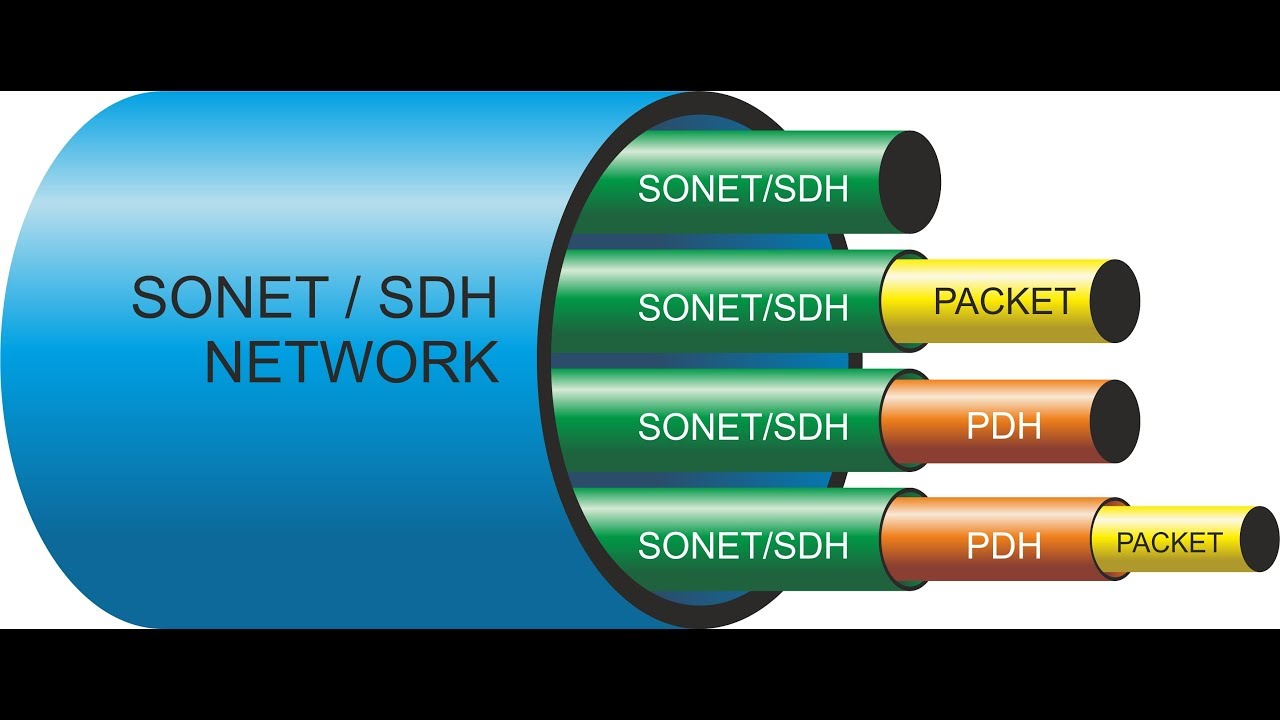
Synchronous Digital Hierarchy (SDH) and Synchronous Optical Network (SONET) refer to a group of fiber-optic transmission rates that can transport digital signals with different capacities. This course discusses synchronous transmission standards in world public telecommunications networks. It will cover their origins, features, applications, and advantages, as well as their impact on network design and synchronous signal structure. This course provides detailed knowledge on the SDH networking elements, and their technologies, required to build evolving transport networks. It provides you with a comprehensive business and technical foundation in optical networks, services and applications development. Further, this course provides advanced SDH topics. The course participants shall be comfortable with the basic concepts of a public telecommunications network, with its separate functions of transmission and switching, and shall be aware of the context for the growth of broadband traffic
The Training Course Will Highlight ?
Training Objective
By the end of this training course, participants should be able to:
- Apply an up-to-date knowledge and skills of latest technology in synchronous digital hierarchy (SDH)
- Implement fiber optics technologies and explore SDH architectures & services
- Identify SDH frame format structure, payload, synchronization & timing and analyze SDH network element, architecture, topologies and configurations
- Practice span engineering and manage SDH networks & services and IP, ATM, WDM and DWDM integration
- List DWDM components and architecture and practice digital voice and Plesiochronous Digital Hierarchy (PDH)
- Apply SDH protocols & concepts, path overhead and payload mappings
- Analyze SDH network elements & application, synchronization and multiplexing
Target Audience
Instrumentation and control engineers and technicians, Telecommunications engineers and technicians, Maintenance engineers and technicians, process control engineer, project engineers, Electrical engineers, consulting engineers, systems engineers, project managers, electricians
Training Methods
This is an interactive course. There will be open question and answer sessions, regular group exercises and activities, videos, case studies, and presentations on best practice. Participants will have the opportunity to share with the facilitator and other participants on what works well and not so well for them, as well as work on issues from their own organizations.
Daily Agenda
Module One: Overview of Fiber Optics Communications
- Analog and Digital Signals
- Standard Voice Channel
- Pulse Code Modulation
- Sampling
- Bit Rate
- Band Width
- Fiber optic transmission
- Optical fibers structure
- Optical amplifiers
- Light sources and transmitters
- Photodiodes and receivers
- Optical communication systems
- Optical components
- Broadband Networks
- B-ISDN, ATM, and SDH
- Optical Networks
- Access, metro, long haul networks
- PDH
- Standard E1 Frame
- SDH Overview
- Overview, Architectures and Services
- SDH in Cable Television & Broadcast Networks
- SDH in Enterprise Networks & LANs
- Convergence of Services
- Overview of SDH Structure & Formats
- Overview of SDH Products & Features
- Overview of SDH Networking
Module Two: SDH Services
- Evolving CPE/ILEC/IXCs Infrastructure & Services
- Inter-Office & Core Networking with SDH
- SDH in the Feeder Section
- Loop Section & the Last Mile
- ADSL (Twisted Pair)
- HFC (Coax)
- FITL/FTTC/FTTH/FTTD (Fiber)
- What are the Benefits of SDH?
- Reduced Back-to-Back Multiplexing
- Optical Interconnect
- Multipoint Configurations
- Convergence, ATM, Video, and SDH
- Grooming
- Reduced Cabling and Elimination of DSX Panels
- Enhanced OAM&P
- Enhanced Performance Monitoring
Module Three: SDH Network Architecture
- Digital and Analog Transmission Standards
- Digital Hierarchy
- Origin of SDH
- Why SDH?
- SDH Signal Format
- Technical Advantages
- Redundancy
- Layers & Functions
- Network path, line, and section
- Multiplexing Frame Structures
- Frame Details & Transport Modules
- Path Overheads
- Section Overheads
- STM-1
- STM-n
- Network Synchronization (timing, modes, pointers, issues)
- Applications & Services
- SDH Network Elements
- Terminal Multiplexer
- Regenerator
- Pointers, MUX/ DEMUX
- Add/Drop Multiplexer
- Digital Cross-Connects
- Payloads
- Digital Loop Carrier
- Protection and Survivability
- Element Managers
Module Four: SDH Network Topologies and Configurations
- Point-to-Point
- Point-to-Multipoint
- Hub Architecture
- Ring Architecture & Configurations (terminals, drops, inserts)
- Span Engineering
- Engineering a SDH (What are the factors?)
- Amplifier power
- Amplifier spacing
- Fiber types
- Channel count and bit rate
- Channel Bit Rate
- Dispersion and polarization
- Non-linear effects
Module Five: SDH Networks Management
- Managing SDH Networks and Services
- Customer and Carrier Advantages
- OAM & P
- Multi-vendor Interoperability and Management
- Routing
- Event Management
- Performance Management
- Integrated SDH Management
- Standards for Network and Service Management
- SDH Testing
- SDH Networks Revision, SDH Networks Problems, and Its Solutions
Accreditation
BTS attendance certificate will be issued to all attendees completing minimum of 80% of the total course duration.
Quick Enquiry
Request Info
Related Courses
Your Growth, Our Mission
Contact Us
Contact us to meet all your inquiries and needs, as our professional team is pleased to provide immediate support and advice to ensure you achieve your goals and facilitate your experience with us in the best possible way. UAE
UAE
 Office
Mobile
Office
Mobile
 E-mail
 Working
Hours
Working
Hours