
Course Details
Your Growth, Our Mission
Course Description
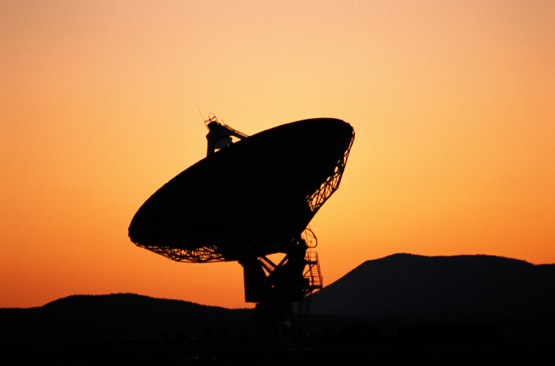
The course aims to provide an in-depth understanding of VSAT systems and protocols in satellite communications. In particular, it will introduce VSAT concepts, satellite communications systems, technologies and protocols. It will also allow participants to assess VSAT systems for deployments into cooperate wide area network solutions.
The Training Course Will Highlight ?
Training Objective
By the end of this training course, participants should be able to:
- Understand the VSAT system fundamentals and application areas
- Understand the satellite communication network
- Have deep insight to VSAT network features, protocols, network management and service provision
- Learn about VSAT Network Architecture, Topologies and Multi-cast Internet Services via Satellite Communication
- Explore Terminal Equipment, antenna types and operating principles for VSAT Systems
- Discuss VSAT Access methods and modulation techniques
- Understand VSAT Terminal installation, commissioning and configuration
- Have practical experience of VSAT terminal installation and troubleshooting
Target Audience
This course is essential for all VSAT techs, field techs, Satellite TV installers, support staff (NOC), operators, users, and managers who want to know and understand VSAT technology.
Training Methods
This is an interactive course. There will be open question and answer sessions, regular group exercises and activities, videos, case studies, and presentations on best practice. Participants will have the opportunity to share with the facilitator and other participants on what works well and not so well for them, as well as work on issues from their own organizations.
Daily Agenda
Module One: Introduction to Satellite Communication
- Introduction to satellites and satellite theory
- Details of the Components of a satellite
- Brief History of satellites communication
- Different types of Satellite orbits
- Satellite Types with focus on Communication satellites
- Radio Frequency Spectrum with focus on Satellite frequencies (C band, L band, Ku band, Ka band)
- Definition of Satellite footprints
- Types of Satellite beams
- Satellite elements
- Satellite signals
- Introduction to RF basics
- Bandwidth Sharing
- TDM, TDMA, FDMA, SCPC, DVB-RCS, DAMA, CDMA
- Modulation and Coding
- Analog and Digital Modulation
- BPSK, QPSK, 8PSK, 16QAM, 64QAM
- Overview of Shannon’s Theory
- Symbol Rate and Bit Rate
- Intersymbol Interference (ISI)
- Forward Error Correction (FEC)
- Data Transmission and Protocols
- Propagation Review
- Introduction to VSAT
- VSAT application
- Advantages and disadvantages of VSATs
- Comparison of VSAT with other terrestrial links
- VSAT Technology
- VSAT Frequency bands in details
- Details of VSAT components-BUC, LNB, Teleport, NOC, Transponder details, Antennas, Feedhorn.
Module Two: VSAT Access Methods
- Types of Access Methods
- Dedicated methods (SCPC)
- Shared Access (FDMA, TDMA, CDMA)
- Need for frequency optimization
- Signal separation
- PAMA & DAMA
- Capacity allocation
- VSAT carriers- upstream downstream
- Link Parameters (Data rate, Modulation, FEC & Reed Solomon)
- Definition and relationship between BER & Eb/No
- Definition and differentiation if a CW & Modulation carrier
- Types of VSAT Networks
- VSAT Connectivity
- VSAT Topologies
- Propagation delay
- Data communication basics
- Data communication Protocols in brief
- Types of VSAT data traffic
- Multicast internet services via Satellite
- VSAT-based IP Communications
- VSAT Service Provision and Quality
- VSAT Voice, Video and Data applications
- Voice and Video over IP
- VPN and Data Services
- High-speed IP VSAT
- Military VSAT Systems
- Commercial VSAT systems and services
- Military vs. Commercial Terminals
- TCP acceleration
- Quality of Service (QOS) in VSAT links
Module Three: Fundamentals of VSAT Systems
- Terminologies with respect to Antennas (Gain, Patterns, Beamwidth, lobes…)
- Antenna Types and Operating principles
- Antenna classes as approved by Satellite operators.
- Types of mounts that support VSATs
- Antenna and Feed Systems: Tx/Rx, Dual Rx, RO
- Theory of Wave Polarization.
- Launching Linearly Polarized Waves
- Matching TX and RX Antenna Orientations
- Cross-Polarized Signals and XPD
- Pol Frequency Re-use and Cross-Pol Transponders
- Cross-Pol Interference
- Linear and Circular Polarization
- Types of cables and their Suitability: RG6, RG11, and RG213
- Types of connectors and their Suitability.
- Tools used in terminating cables/crimping tools.
- Preview of Large Earth Station Equipment.
- Typical block Diagrams of VSAT systems.
Module Four: Site Survey and Installation Steps
- Site Survey
- Undertaking a Site Survey.
- Filling out a Site Survey Report.
- Indoor Electronics Installation
- Configuration & control of equipment
- VSAT Monitoring, Control and Network Management Systems
- Link Budget and Link Margins
- Signal power and noise power bandwidth
- VSAT Installation Concepts
- VSAT pointing variables:
- Latitude
- Longitude
- Azimuth
- Elevation
- GEO Arc
- AZ-EL Beam Movement Across the Arc
- Tools & Equipment used when pointing at site
- Installation Steps
- Cabling
- Assembly
- Pointing
- Commissioning i.e. Carrier Lineup and Cross-Pol Checks.
- Testing
- Common Faults and problems: Site faults, Interference, losses due to weather.
- Troubleshooting of VSAT Terminals
- Antennas issues
- Alignment on the Satellite
- Amplifier saturation
- Maintenance of RF and Baseband
- Blockage and gain compression
- Elevation Effects
- Troubleshooting Network, and Interference issues
- Issues the DC Voltage Dop on Cables
- Common Field Mistakes
- Uplink alignment
- Preventive Maintenance
- Case Studies of VSATs
- Broadband VSAT
- Use of a Spectrum Analyzer to view the satellite spectrum and in troubleshooting.
- Mention other types of VSATs other than Fixed VSATs.
Module Five: Practicals
- Antenna assembly.
- Antenna Pointing using Satellite modem.
- Antenna pointing using a Spectrum analyzer
- Antenna pointing using a Field Strength Meter (FSM).
- Checking site receive levels: EbNo, BER, SNR
Accreditation
BTS attendance certificate will be issued to all attendees completing minimum of 80% of the total course duration.
Quick Enquiry
Request Info
Related Courses
Your Growth, Our Mission
Contact Us
Contact us to meet all your inquiries and needs, as our professional team is pleased to provide immediate support and advice to ensure you achieve your goals and facilitate your experience with us in the best possible way. UAE
UAE
 Office
Mobile
Office
Mobile
 E-mail
 Working
Hours
Working
Hours