
Course Details
Your Growth, Our Mission
Course Description
Smart metering has been recognized as a major part of the smart grid system. It has been touted as a great bright hope that will enable residential electric customers to cut their usage and save electricity costs. Although modern solid-state meters represent a major improvement over traditional meters, utilities are still facing the challenge of measuring and monitoring the quality of energy supplied to consumers, especially as the number of their customers increases. As such, this process requires a number of labour-intensive operations, such as manual meter reading, field trips for service connects and disconnects, on demand reads, power outage and restoration management, and other metering support functions, that could be handled more efficiently via automation, which is the driver for the new smart meters. In addition to being solid state meter, smart meters also have built-in communication capabilities that allow it to send its measurements to the utilities directly. Smart meters are one of the first smart grid remote communication technologies and early installations record premises energy consumption at regular intervals and use Automatic Meter Reading (AMR) to send measurements periodically to the utilities billing system. Technologies such as Advanced Metering Infrastructures and smart meters will allow real time interaction between utilities and their consumers and help optimize their electricity supply operations. These technologies will ultimately help the consumer to manage their energy usage more efficiently and make savings on their electricity bills.
The Training Course Will Highlight ?
The course cover the evolution of electricity meters from typical electromechanical meters to modern smart meters. The theory, operation principles, and drawbacks of typical electromechanical meters are addressed. The operating mechanism of reactive energy meters and maximum demand meters are also addressed. The development of solid state meters and conversion of the technology to smart meters are pointed out. This course reveals the advantages of smart meters in modern energy measurement and the basic hardware structure of a modern smart meter. A broader discussion is done about the hardware components inside a smart meter including voltage and current sensors, power supplies, energy measurement, microcontroller, real time clock, and communication protocols. The standards used for smart meters are also highlighted.
The course present the applications of smart meters in today’s world. The integration of smart metering in distributed generation, voltage, and reactive power monitoring in distributed grid, enhancement of HVAC system performance, and demand side load management are discussed. The residential load controlling through smart metering, the integration of smart appliance controllers, demand side primary frequency control, optimal energy management under time varying tariff structures, and their impacts on energy conservation and electricity cost reduction are given with modern world examples.
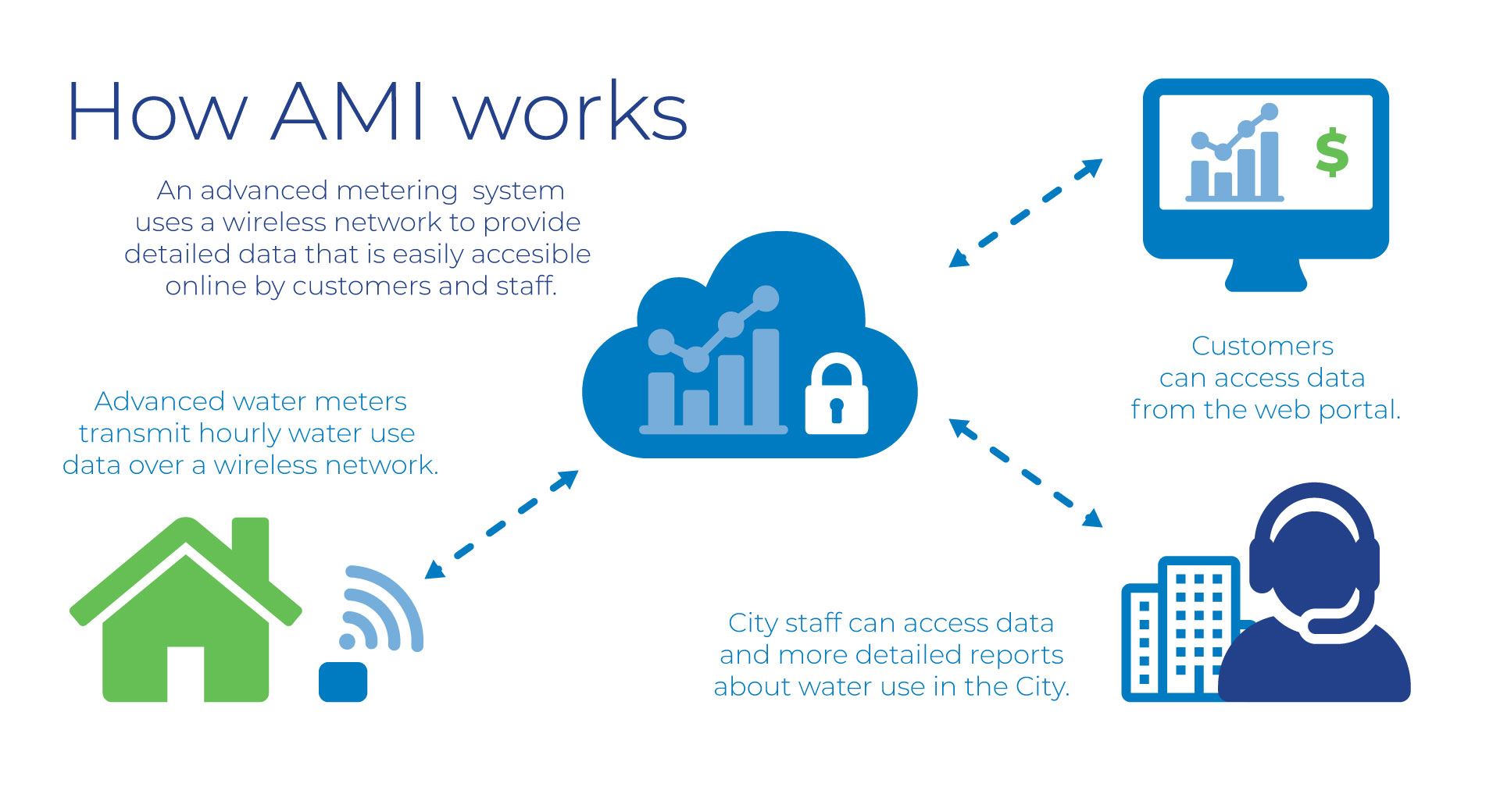
The course will emphasis on AMI the two-way interaction between the consumer and the utility. It provides real time electricity pricing, electricity usage, electricity cost, outage detection and accurate load characterization. The course will show AMI integrated with smart meters, in-home displays, and load controllers.
Training Objective
- Gain an understanding of the various elements involved in smart metering technology
- Understand the importance of accurate electrical metering technology
- Gain an appreciation of the different types of Electricity Tariffs
- Gain a clear understanding of different types of electrical metering instruments
- Be aware of what technologies can be employed to increase energy efficiency in buildings
- Understand the roadmap for future roll-out of the Smart Grid
- Gain an insight into smart metering devices and principles of operation
- Appreciate the role of BMS and SCADA systems in advanced metering applications
- Understand future technologies in metering applications
Target Audience
- Electrical Power Technicians
- Electric Grid Operators
- Electricity Supply Company Technicians
- Transmission & Distribution system Technicians
- Facilities Managers
- Building Service Technicians
- Energy professionals
- Maintenance Technicians
- Instrument Operators
Training Methods
This interactive Training will be highly interactive, with opportunities to advance your opinions and ideas and will include;
- Lectures
- Workshop & Work Presentation
- Case Studies and Practical Exercise
- Videos and General Discussions
Daily Agenda
DAY 1
- Overview of Transmission Line Survey components
- Basics of Survey requirements for Line designing
- Advance Techniques to be followed during survey for the line designing in software
Module (01) Traditional Metering Technology
- 1 Definition of Metering Terminology
- 2 Operation Principles of an Electromechanical Energy Meter
- 3 Evolution of Electricity Meters
- 4 Operation Principles of an Electromechanical Energy Meter
- 5 Drawbacks of the Electromechanical Energy Meters
- 6 Reactive Energy Meters
- 7 Maximum Demand Meters
- 8 Electronic Meters
- 9 Smart Meters
- 10 The Hardware Structure of a Smart Meter
- 11 Energy Measurement Unit
- 12 Components of Standard Electrical Metering Systems
Module (02) Electrical Metering Schemes
- 1 Types of Meters and Electricity Measurements
- 2 Overview of Electrical Networks
- 3 Automatic Meter Reading (AMR) systems
- 4 Industrial Metering Systems Architecture
- 5 Typical Substation Layout
- 6 Principals of Substation Electrical Metering Design
- 7 Substation Automation Interfaces to IEC61850
- 8 ION Energy Monitoring System
- 9 Switchboard Power Metering Combinations
Module (03) Smart Electricity Grids
- 1 Smart Grid align with Technology
- 2 Switching to Smart Grid Technologies
- 3 Objectives of Smart Grid Roll-out
- 4 Smart Grid Economics
- 5 Smart Grid Road Maps
- 6 Challenges to meeting Smart Grid Goals
Module (04) Smart Meters Integrated with Smart Grids
- 1 Smart Grid align with Technology
- 2 Switching to Smart Grid Technologies
- 3 Objectives of Smart Grid Roll-out
- 4 Smart Grid Economics
- 5 Smart Grid Road Maps
- 6 Challenges to meeting Smart Grid Goals
Module (05) Energy management, revenue metering and power quality monitoring
- 1 Current transformers
- 2 Panel instruments
- 3 Basic energy meters
- 5 Multi-circuit and wireless metering
- 6 Basic multi-function metering
- 7 Intermediate metering
- 8 Advanced metering
- 9 Advanced utility metering
- 10 Communications
- 11 Power management software
Module (06) Home Energy Management Systems
- 1 Energy Usage in Homes and Buildings
- 1.1 Heating and Cooling
- 1.2 Lighting System
- 1.3 Daily Appliances
- 2 Smart Home and Home Energy Management
- 2.1 Existing Energy Management Solutions
- 2.2 Home Energy Management Operations and Components
- 2.3 Smart Appliances
- 2.4 Environment Sensors and Actuators
- 2.5 Home Energy Controller
- 3 Communication for Home Energy Management
- 3.1 Communication Architectures for Home Energy Management
- 3.2 Communication Requirements
- 3.3 Communication Technologies and Solutions
Module (07) Smart Metering and Infrastructure
- 1 Smart Metering and Infrastructure Overview
- 2 Major System Components of SMI
- 3 Smart Meters
- 4 Communication System
- 5 Meshed Network Radio Frequency
- 6 Point-to-Point Radio Frequency
- 7 Power Line Carrier/Broadband Power Line
- 8 Wireless Broadband
- 9 Cellular Technologies
- 10 Satellite Technologies
- 11 Optical Fiber Technologies
Module (08) Practical Examples of Smart Meter Data Analytics
Accreditation
BTS attendance certificate will be issued to all attendees completing a minimum of 80% of the total course duration.
Quick Enquiry
Request Info
Course Rounds
5 Days| Code | Date | Venue | Fees | Action |
|---|---|---|---|---|
| EE174-05 |
2026-12-13
|
Dubai
|
USD
5450
|
Register |
| EE174-01 |
2027-01-17
|
Cairo
|
USD
5450
|
Register |
| EE174-02 |
2027-04-19
|
Kuala-Lumpur
|
USD
5950
|
Register |
| EE174-03 |
2027-07-18
|
Dubai
|
USD
5450
|
Register |
| EE174-04 |
2027-10-18
|
Istanbul
|
USD
5950
|
Register |
Prices don't include VAT
Related Courses
Your Growth, Our Mission
Contact Us
Contact us to meet all your inquiries and needs, as our professional team is pleased to provide immediate support and advice to ensure you achieve your goals and facilitate your experience with us in the best possible way. UAE
UAE
 Office
Mobile
Office
Mobile
 E-mail
 Working
Hours
Working
Hours