

Course Details
Your Growth, Our Mission
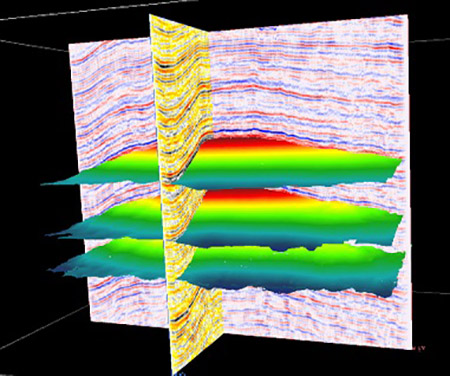
Course Description
This course is designed to give a broad-based review of the key seismic interpretational techniques relevant to subsurface analysis. The nature of the seismic response will be considered with reference to both structural evaluation, and methods for strati graphic analysis. The analysis of fluid types will also be considered, along with attribute analysis and display techniques.
The Training Course Will Highlight ?
Training Objective
By the end of this BTS training course, participants will be able to:
- Evaluate more effectively their seismic datasets and what interpretation is possible
- Perform the principal seismic interpretational techniques for structural, stratigraphic and reservoir scale evaluation
- Assess the importance of key seismic data characteristics, such as resolution, phase, wavelet shape, dynamic range and processing artefacts
- Manage the main facets of structural interpretation, such as correlation, tracking, slicing, composite and volume displays
- Appraise the forms of stratigraphic interpretation within a 3D seismic dataset and demonstrate the leading techniques for the extraction of stratigraphic information, such as horizon slices
- Judge the main limitations of seismic display, specifically color, phase, polarity and resolution and how they may be overcome and harnessed to elucidate further detail in a dataset
- Assess the multiplicity of hydrocarbon reflection characteristics, enabling more hydrocarbon reserves to be found through seismic interpretation
- Perform those techniques and understand the limitations that allow the seismic method to be pushed to the reservoir scale
- Evaluate the range of seismic attributes and establish how to select the correct one for the problem at hand.
- Manage the use of 3D seismic data in the reservoir evaluation process and examine how to determine such reservoir properties as net-to-gross ratio, net pay, porosity and pore volume.
Target Audience
Geologists, Geophysicists, Reservoir Engineers, Production Engineers, Petro physicists, Petroleum Engineers, Drilling Engineers, Field Development Engineers, Managers, Asset Managers, Oil & Gas Engineers, Reservoir Operators, Surveillance Engineers, Technicians, Engineering Trainees, Technical Managers, Technical Assistants, Technicians, Chemists, Physicists, Technical Supervisors, Service Company Personnel responsible for improving the performance of petroleum reservoirs, experienced subsurface professionals from other disciplines who require a working knowledge of seismic interpretation techniques
Training Methods
This interactive Training will be highly interactive, with opportunities to advance your opinions and ideas and will include;
- Lectures
- Workshop & Work Presentation
- Case Studies and Practical Exercise
- Videos and General Discussions
Daily Agenda
Introduction
- Vertical seismic resolution
- The two resolution limits
- The seismic wavelet
- Importance of amplitude and phase control
- Dynamic range
- Horizontal seismic resolution
- Fresnel zone
- Seismic migration
- Regularity and acquisition footprint
Structural Interpretation
- Slicing the cube, time (or depth) slices and their importance
- Fault handling
- Contouring exercise
- Structural case histories
- Interpretable structural detail
- Composite and volumetric displays
- Phase sections
- Subtle faults and their detection
- Coherence
- Autotracking and its precision, time-derived horizon attributes
- Tracking validation
- Generalized procedure
- Interpretation confidence
Stratigraphic Interpretation
- Recognition of characteristic shapes
- Importance of strike view
- Channels, bars, levees, dunes and carbonate features
- Resolution limitations
- Horizon slices and their methods of construction
- Reconstitution of depositional surfaces
- Stratigraphic patterns to verify structure, unconformities
- Turbidite mapping exercise
Colour and Phase
- Limitations of conventional display
- Colour principles
- Contrasting and double and single gradational schemes
- Visibility of amplitude detail
- Scales
- Recognition of data phase
- Data polarity
- Natural pairing and phase circles
Reservoir Identification
- Bright spots
- Dim spots
- Phase changes
- Flat spots and their necessary characteristics
- Impact of color
- Amplitude and display scales
- Use of top and base reflections and spatial relationships
- Tuning phenomena in reservoir reflections
- Importance of zero-phaseness and knowledge of polarity
- Approach to validation
- Reservoir limits
- Occurrence of fluid effects
- Reservoir identification exercise
Attributes
- Classification
- Amplitude-derived and frequency-derived horizon attributes
- Windowed attributes
- Hybrid attributes
- 3D AVO
Reservoir Evaluation
- Properties affecting amplitude
- Interpretation regimes
- Well calibration
- Composite amplitude
- Mapping of porosity
- Net-to-gross and net pay thickness
- Tuning estimation and removal
- Pore volume
- Case histories
Accreditation
BTS attendance certificate will be issued to all attendees completing minimum of 80% of the total course duration.
Quick Enquiry
Request Info
Related Courses
Your Growth, Our Mission
Contact Us
Contact us to meet all your inquiries and needs, as our professional team is pleased to provide immediate support and advice to ensure you achieve your goals and facilitate your experience with us in the best possible way. UAE
UAE
 Office
Mobile
Office
Mobile
 E-mail
 Working
Hours
Working
Hours