

Course Details
Your Growth, Our Mission
Course Description
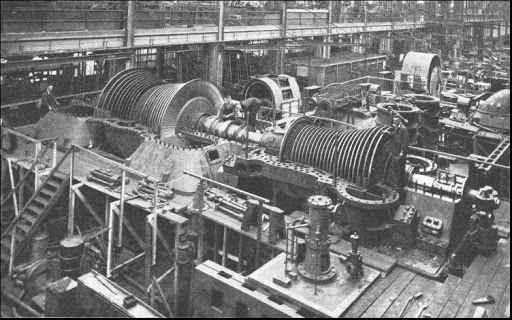
There are two main types of steam turbine, impulse and reaction. The principles are different, but the processes construction are somewhat similar. In either type steam is caused to impinge on blades carried on a rotating part. The high speeds and stresses involved necessitate great strength and accuracy of manufacture. Since Sir Charles A. Parsons produced in 1884 his first practicable steam turbine, enormous advances have been made with this form of prime mover. The generation of electricity on a rapidly growing scale all over the world during recent years has led to the almost universal use of steam turbines for the driving of electric generators where water power is unobtainable. The objective of this module is to present the major features of steam turbine construction, and support systems.
The Training Course Will Highlight ?
Training Objective
By the end of this course delegates will be able to:
- Major components of the steam turbine
- Conversion of heat energy (in steam) to rotating mechanical energy
- Stationary and moving blades
- Impulse and reaction blading
- Steam conditions at turbine exhaust
Target Audience
Electrical Engineers, Power Generation Engineers, Power System Protection Engineers, Process Control Engineers & Personnel, Electrical and Instrumentation Technicians & Design Engineers, Maintenance Technicians & Supervisors, Plant Operators & Technicians, Oil & Gas Industry Personnel
Training Methods
This interactive Training will be highly interactive, with opportunities to advance your opinions and ideas and will include;
- Lectures
- Workshop & Work Presentation
- Case Studies and Practical Exercise
- Videos and General Discussions
Daily Agenda
- Major components of the steam turbine
- Conversion of heat energy (in steam) to rotating mechanical energy
- Stationary and moving blades
- Impulse and reaction blading
- Steam conditions at turbine exhaust
- Increase in specific volume of steam at low pressure
- Typical multi-cylinder arrangements
- Location of support bearings
- Function of the thrust bearing
- Allowance for expansion of rotor and casing
- Rotor construction, disks and blades
- Diaphragms and fixed blades
- Turbine assembly
- Function of shaft gland seals
- Gland steam leak-off and supply system
- Interstage seals
- Typical lube oil circulation system
- Need for continuous lube oil cooling and cleaning
- Standby oil pumps A.C. and D.C
- Hydraulic oil application
- Combined lube and hydraulic oil system
- Function of the condenser and location
- Condenser mechanical arrangements
- Fouling of condenser tubes and tube plate
- Water box siphon system
- Effect of air leakage into the condenser
- Removal of air and incondensable gases from the condenser by vacuum equipment
- Function of the steam ejector for start-up and on-line operation
Accreditation
BTS attendance certificate will be issued to all attendees completing a minimum of 80% of the total course duration.
Quick Enquiry
Request Info
Course Rounds
5 Days| Code | Date | Venue | Fees | Action |
|---|---|---|---|---|
| EE134-05 |
2026-11-08
|
Dubai
|
USD
5450
|
Register |
| EE134-01 |
2027-01-03
|
Dubai
|
USD
5450
|
Register |
| EE134-02 |
2027-06-07
|
Istanbul
|
USD
5950
|
Register |
| EE134-03 |
2027-08-01
|
Cairo
|
USD
5450
|
Register |
| EE134-04 |
2027-11-01
|
Kuala-Lumpur
|
USD
5950
|
Register |
Prices don't include VAT
Related Courses
Your Growth, Our Mission
Contact Us
Contact us to meet all your inquiries and needs, as our professional team is pleased to provide immediate support and advice to ensure you achieve your goals and facilitate your experience with us in the best possible way. UAE
UAE
 Office
Mobile
Office
Mobile
 E-mail
 Working
Hours
Working
Hours